Fire Truck Tender Benchmark
We tested how well the reading step of Mavlon's AI Quoting Engine reads fire truck tenders, using six public fire apparatus tenders from Germany and the United States. It matched 181 of 184 checks against answer keys written before the runs and found 46 of the 50 contradictions in the keys.
A fire truck tender is long, goes line by line, and leaves little room for error. A city or a fire brigade writes a specification of a hundred pages or more, every paragraph needs a yes or an exception, and the price depends on details scattered across the specification, the contract terms, the scoring sheet and the price form. In Europe, the same truck is often split into separate lots for the chassis, the body and the equipment. Because of this, we built a test that anyone can check. We took six public fire apparatus tenders, three from Germany in German and three from the United States, wrote down what each one says before any run, and then let the reading step of Mavlon's AI Quoting Engine read each package once.
This page shows every score, every miss and every answer key, so you can judge the result yourself.
Can AI read a fire truck tender? What this test measures
The test checks the reading that a sales engineer at a fire apparatus builder does before anyone prices a truck. For each tender, the answer key holds 30 to 33 checks, 184 in all. Every check is a detail that changes the price, and every one is tied to a short quote and the page it came from. For example, we check the following items:
- We look at the vehicle type, the standard it is built to, the quantity and the options.
- We check how the tender is split into lots, and which lot a body builder would bid on.
- We check the chassis, including the weight limit, engine power, transmission, dimensions and crew cab.
- We check the body, including the material, pump, water and foam tanks, ladder or aerial device, lighting and electrics.
- We look at the delivery deadline, penalties, payment terms, bonds, warranties and inspection trips.
- We check how offers are scored, and the format for compliance answers and exceptions.
The test also checks for contradictions, which are the places where one document says something different from another. Every key lists the contradictions we confirmed before the runs, which came to 50 in total across the six tenders.
How the test was run
We wrote every answer key first. Mavlon prepared the keys with AI help before any run, quoting the exact words and page for each check, and a script then compared every quote with the page it cites.
Then each tender was read once, with no reruns and no hints. The reading step worked inside a closed folder that held only that tender, with no internet and no access to the keys. It read the German tenders in German and wrote its answers in English, giving the file and page for each value.
A separate reader then scored each run against its key. The scoring is strict: an answer that was only partly right counts as a miss. That reader also opened the pages behind every contradiction the run flagged and marked whether each one held up, did not hold up, or was unclear.
The results
Across the six tenders, the reading step matched 181 of 184 checks. It found 46 of the 50 contradictions in the keys. The tenders ran to 770 pages in total, and each one took between 10.7 and 21.9 minutes to read.
| Package | Language | Pages | Checks right | Key contradictions found | Flagged contradictions that held up | Minutes |
|---|---|---|---|---|---|---|
| Tulsa, Oklahoma, United States | English | 217 | 30 / 30 | 11 / 12 | 26 / 29 | 16.4 |
| Mehlville Fire Protection District, Missouri, United States | English | 74 | 30 / 30 | 7 / 7 | 15 / 16 | 11.8 |
| Galax, Virginia, United States | English | 49 | 29 / 30 | 8 / 8 | 12 / 25 | 10.7 |
| Wertingen and Höchstädt, Bavaria, Germany | German | 177 | 31 / 31 | 10 / 10 | 25 / 34 | 21.9 |
| Lübeck, Germany | German | 184 | 30 / 30 | 7 / 9 | 18 / 23 | 14.4 |
| Waldbröl, North Rhine-Westphalia, Germany | German | 69 | 31 / 33 | 3 / 4 | 16 / 27 | 14.7 |
Everything it did not get fully right is listed here, so nothing hides behind the totals:
- Tulsa: It did not flag one contradiction in the key, which was the award basis.
- Galax: On the hose reels check, the run was unsure whether there are one or two booster reels, while the spec gives one on each side, two in all, each with 150 ft of 1-inch hose and a nozzle.
- Lübeck: It did not flag one contradiction in the key about where and how much training is needed.
- Lübeck: It did not flag one contradiction in the key about the binding quantity versus a +/-10% quantity change.
- Waldbröl: On Check 3, which was partly right, the run listed every standard, but it did not say that the limit values of the norms apply only where the tender sets no different limit.
- Waldbröl: On Check 4, which was partly right, the run reported the stowage standards DIN EN 1846-2 and DIN 14530-27, but then it suggested DIN 14530-27 might be a slip for DIN 14530-21.
- Waldbröl: It did not flag one contradiction in the key about whether the DIN 14530-21 minimums or the tender values govern.
The contradictions it flagged, and how many held up
The reading step flagged 154 contradictions of its own. When we checked the pages, 112 held up, 27 did not and 15 were unclear. The ones that did not hold were mostly judgement calls, such as treating requirements written for two different lots as if they clashed. We publish this number because a list of possible problems is only useful if most of them are real.
Where the reading found more than our keys
Of the contradictions that held up, 72 were not in our keys at all. Here are three of them:
- Wertingen and Höchstädt: The body price list orders an external security card reader for the radio in one position and says external card readers are not accepted three positions later.
- Tulsa: The rear blitz line is 2-1/2 inch in 8.42, 8.71 and Q&A 21, but 6.107 and Q&A 23 make it the 3 inch preconnect in the centre of the hose bed.
- Lübeck: The Lot 2 scoring sheet points its last four criteria at the wrong price-sheet lines (10.7-10.10 instead of 10.8-10.11), so the rust warranty score is tied to the transfer option line.
What makes a fire truck tender hard to read
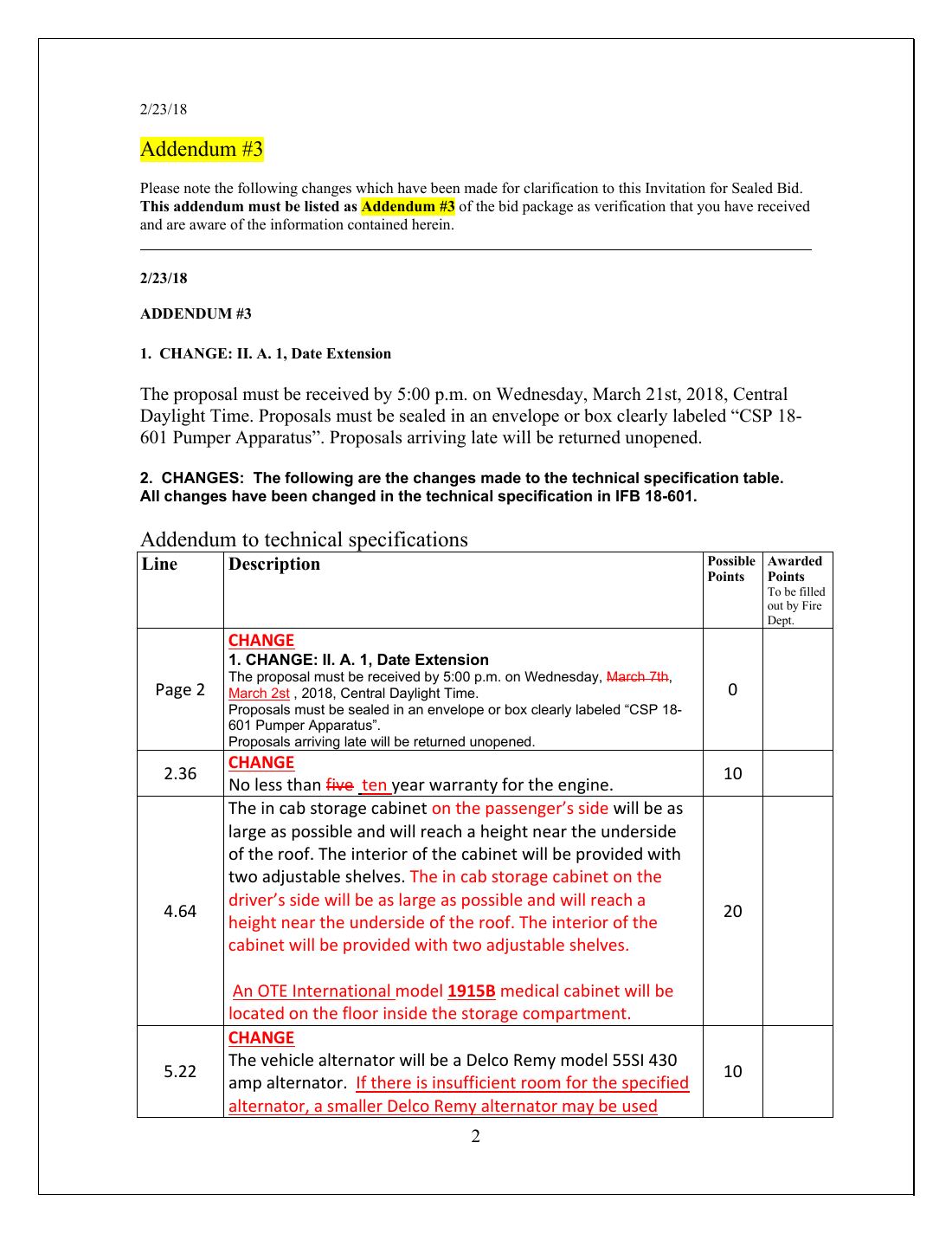
- Changes that only show on the page. In Tulsa, the addenda mark changes in red strikethrough, and the text inside the PDF merges the old and new words.
- Lots that overlap. In Lübeck and Wertingen, the chassis lot and the body lot both describe the same parts, so the same item can be bought twice or by nobody.
- Numbers that disagree. The rust warranty in Lübeck is at least 6 years in one place and at least 144 months in another, and Wertingen gives two different price weightings.
- Leftovers from other trucks. The Mehlville rescue specification still asks for pump parts on a truck with no pump.
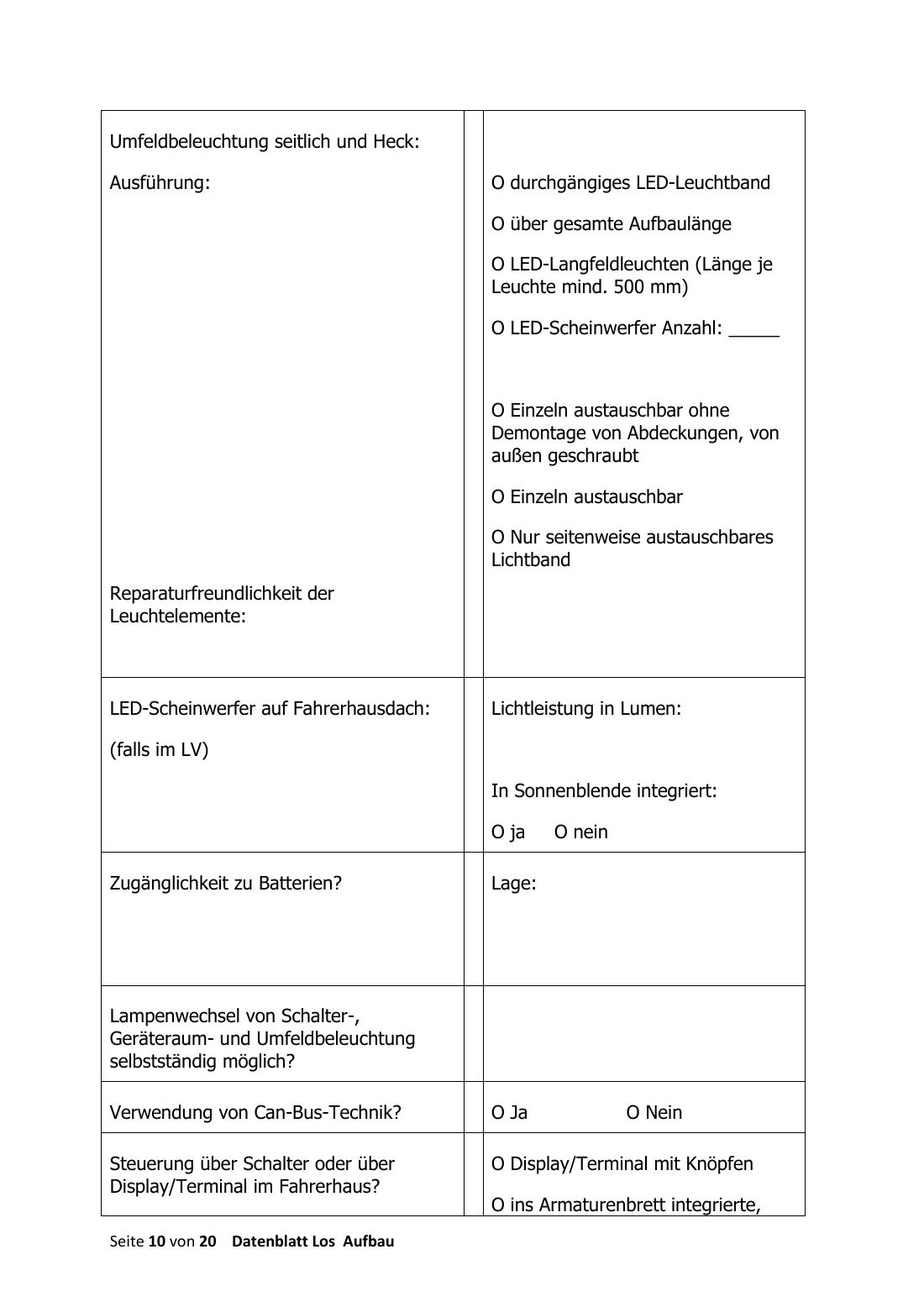
- Language. Half the tenders are in German, and they have their own vehicle norms and contract forms.
What this test does not measure
This test measures reading, not design or pricing. The reading step does not design the truck or price its options. Pricing depends on each builder's own option prices and past jobs, so we test it separately on a builder's own past tenders. The fire truck page shows how the reading turns into a priced draft quote, and our fire truck RFP guide walks through a tender line by line.
Tender by tender
Tulsa, Oklahoma, United States
Source: This tender came from the City of Tulsa, Oklahoma (Finance Department for the Tulsa Fire Department), Competitive Sealed Proposal CSP 18-601, Pumper Apparatus, 2018.
What made it hard: Two addenda reissue the whole specification, the changes show only as red strikethrough on the page, and the change tables still use the old line numbers after the specification was renumbered.
Result: The run got 30 of 30 checks right, found 11 of 12 key contradictions, and 26 of the 29 contradictions it flagged held up. It took 16.4 minutes.
One find beyond the key: The rear blitz line is 2-1/2 inch in 8.42, 8.71 and Q&A 21, but 6.107 and Q&A 23 make it the 3 inch preconnect in the centre of the hose bed.
Mehlville Fire Protection District, Missouri, United States
Source: This tender came from the Mehlville Fire Protection District (St. Louis County, Missouri), Request for Proposal: One 2-Door Custom Cab Heavy-Duty Walk-in Rescue (Rescue 1756), 2024.
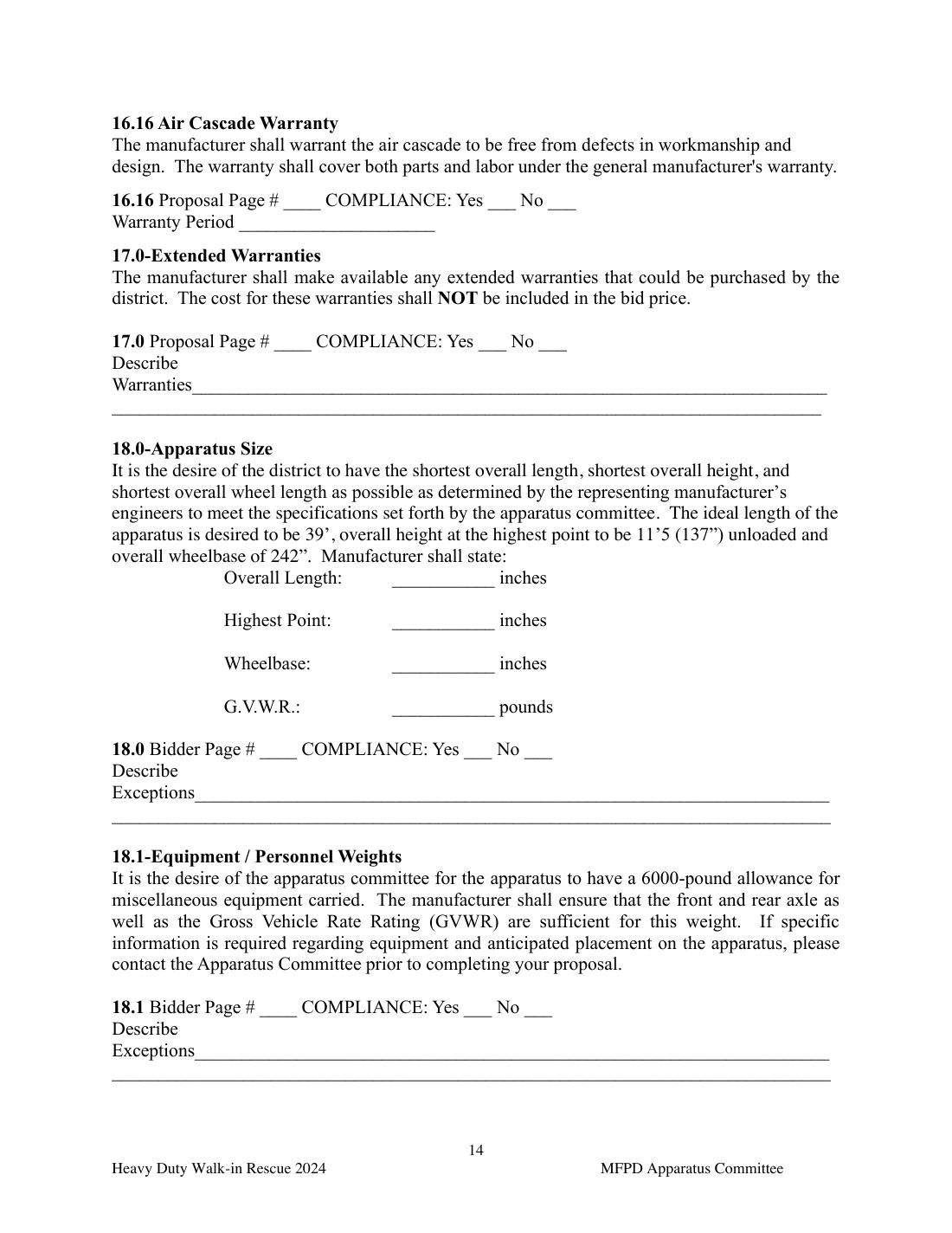
What made it hard: It is a 74-page line-by-line specification with a yes or no box under every section, and because it was written from a pumper template, it still asks for pump parts, rear cab doors and a hose trough the truck does not have.
Result: The run got 30 of 30 checks right, found 7 of 7 key contradictions, and 15 of the 16 contradictions it flagged held up. It took 11.8 minutes.
One find beyond the key: The open-door alarm sounds if 'the awning is not retracted', but no awning is specified anywhere, so a builder must ask whether a powered awning is wanted.
Galax, Virginia, United States
Source: This tender came from the City of Galax, Virginia, Galax Fire & Rescue Department, RFP 25-0018, Fire Apparatus Tanker, Tanker 10 (FEMA grant funded), 2025.
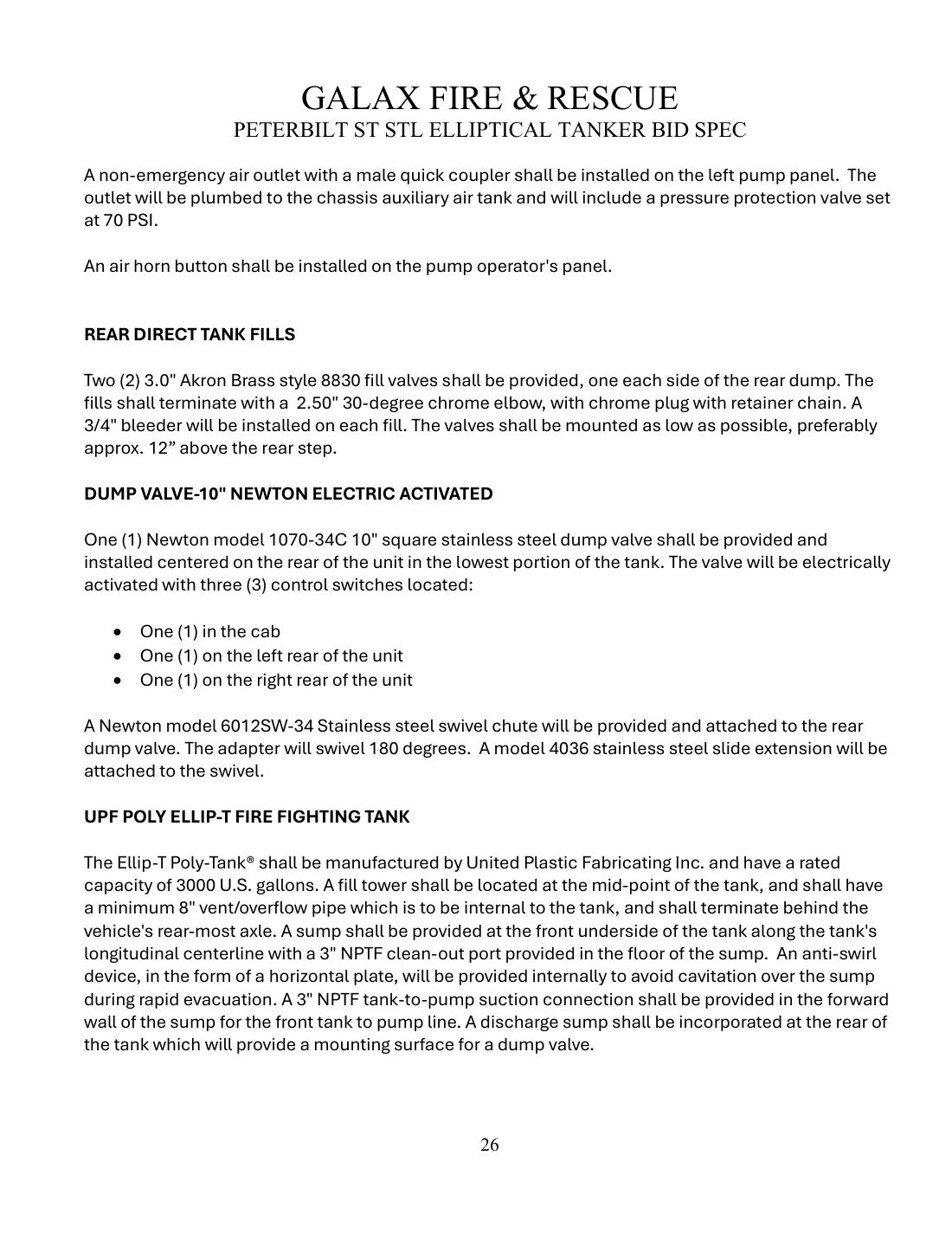
What made it hard: Payment, warranty, insurance and substitution rules contradict each other inside one 49-page document, and the paint, height and tank jacket are described two ways.
Result: The run got 29 of 30 checks right, found 8 of 8 key contradictions, and 12 of the 25 contradictions it flagged held up. It took 10.7 minutes.
One find beyond the key: The pump section asks for two tank-to-pump lines, front and rear, with separate controls, but the tank section only gives a front outlet and the pump panel list has one control.
Wertingen and Höchstädt, Bavaria, Germany
Source: This tender came from Stadt Wertingen (lead) with Stadt Höchstädt a.d. Donau, Bavaria (each buying in its own name), Gemeinsame Beschaffung von zwei baugleichen Drehleitern DLA (K) 23/12 für die FF Wertingen und FF Höchstädt mit Beladung (aumass platform; the reference AV290306-EU / V024899 given with the package is not printed in the documents), 2026.
What made it hard: There are twenty-five German documents across four lots, a delivery deadline that is referred to but never given, a generator that no lot supplies, and two different price weightings.
Result: The run got 31 of 31 checks right, found 10 of 10 key contradictions, and 25 of the 34 contradictions it flagged held up. It took 21.9 minutes.
One find beyond the key: The body price list orders an external security card reader for the radio in one position and says external card readers are not accepted three positions later.
Lübeck, Germany
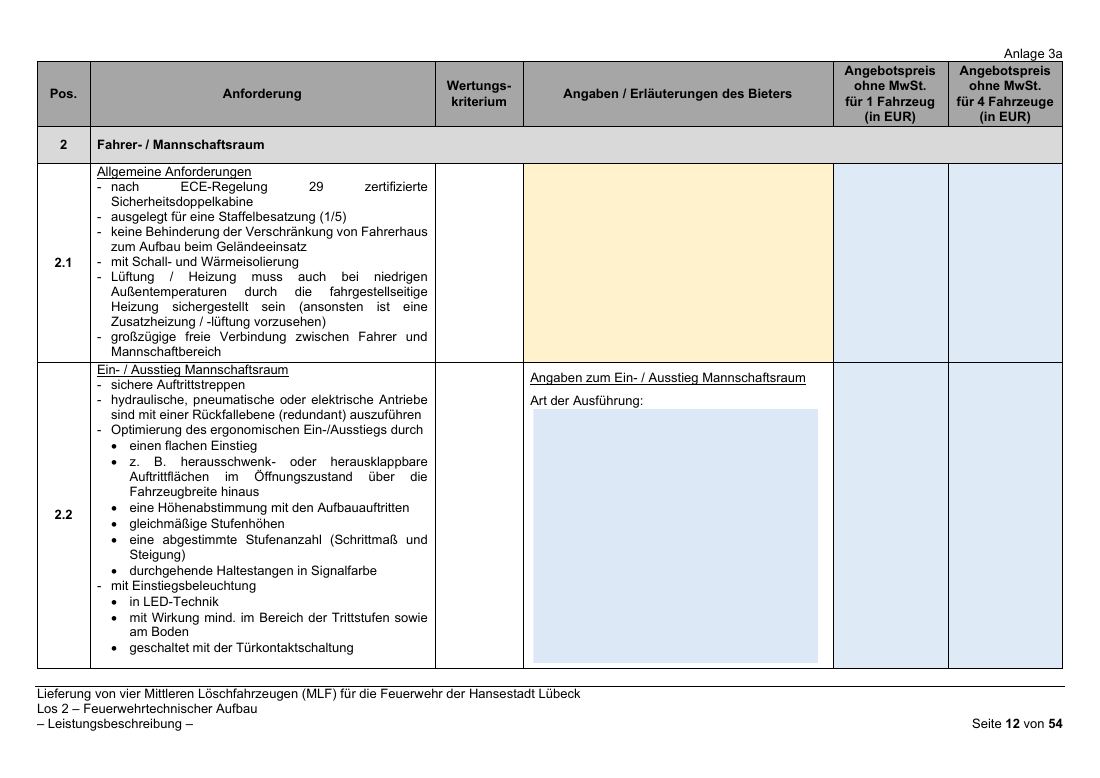
Source: This tender came from Hansestadt Lübeck (Der Bürgermeister, Vergabewesen) for the Feuerwehr Lübeck, Lieferung von vier Mittleren Löschfahrzeugen (MLF) für die Feuerwehr der Hansestadt Lübeck, DTVP procedure 1.102.1-088/26, 2026.
What made it hard: The body lot and the chassis lot overlap, the rust warranty is 6 years in one place and 144 months in another, and transport is included, excluded and offered as an option in three different places.
Result: The run got 30 of 30 checks right, found 7 of 9 key contradictions, and 18 of the 23 contradictions it flagged held up. It took 14.4 minutes.
One find beyond the key: The Lot 2 scoring sheet points its last four criteria at the wrong price-sheet lines (10.7-10.10 instead of 10.8-10.11), so the rust warranty score is tied to the transfer option line.
Waldbröl, North Rhine-Westphalia, Germany
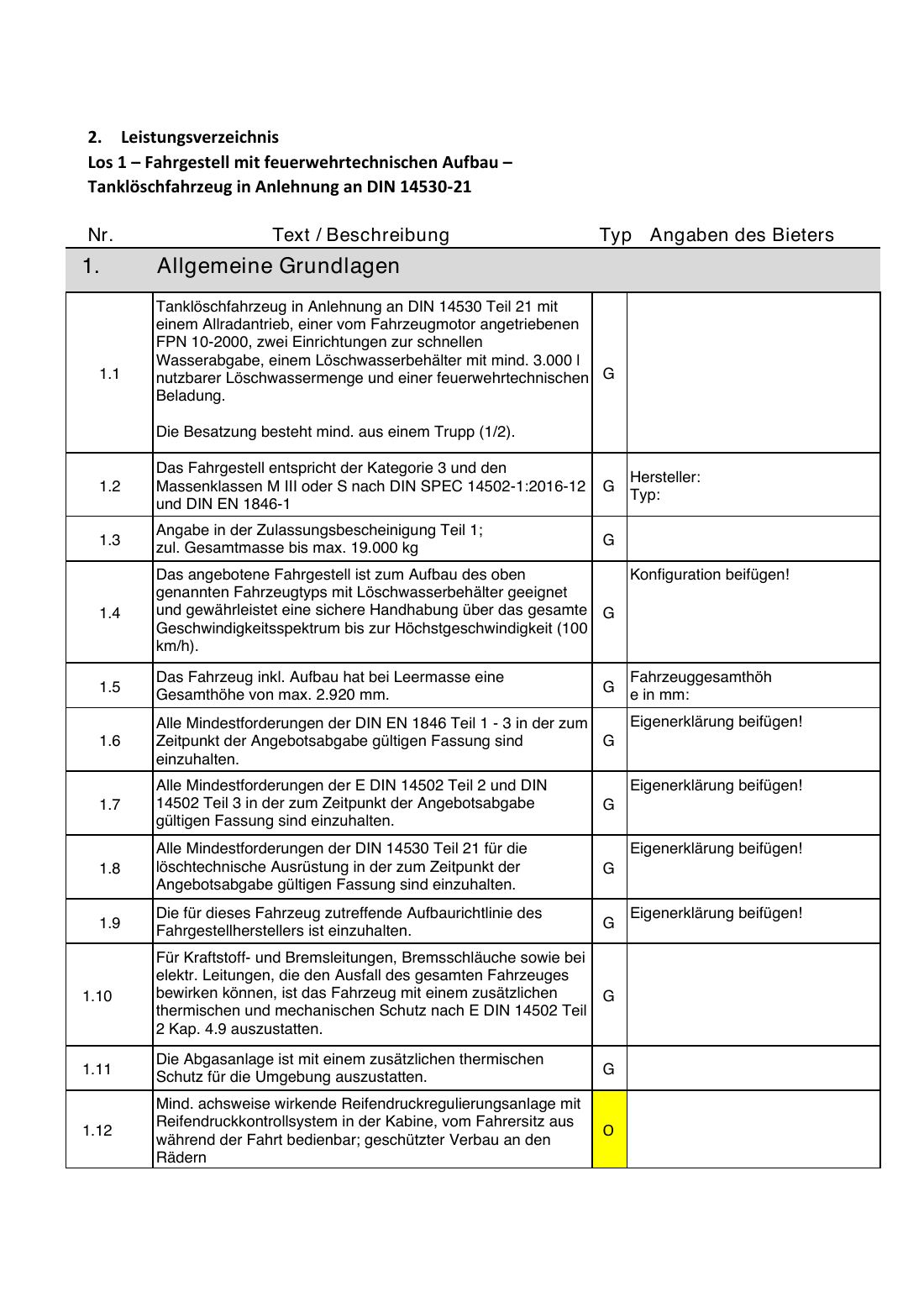
Source: This tender came from Marktstadt Waldbröl (Fachbereich 2) for the Freiwillige Feuerwehr Waldbröl, Löschzug I, Tanklöschfahrzeug in Anlehnung an DIN 14530-21, Vergabe-/Projekt Nr. FF-001/2022 (EU open procedure), 2022.
What made it hard: It is a single 69-page German tender where the warranty start, the handover point and the loading list do not agree, and the equipment table does not add up to its printed total.
Result: The run got 31 of 33 checks right, found 3 of 4 key contradictions, and 16 of the 27 contradictions it flagged held up. It took 14.7 minutes.
One find beyond the key: The Lot 2 equipment rows add up to 627.90 kg, but the printed total is 611.80 kg, and that mass feeds the payload under the 19 t cap.
Downloads
The scores and all ten answer keys are free to download. Each key lists every check with the quote and page it came from, and the contradictions we confirmed before the runs.
To cite this page:
Changelog
Version 1.0, 18 November 2026. All six tenders run once and scored: Tulsa, Mehlville, Galax, Wertingen, Lübeck and Waldbröl.
Reading the package is only the first step of a quote. The AI Quoting Engine then prices every line from your own rates, carries both readings where the documents disagree, and writes the questions for your customer, so your estimator checks a draft instead of starting from a blank sheet.
See how it works for fire truck builders
Book a demo