For makers of switchgear and power equipment

AI to read electrical drawings, starting with the single line diagram.

Your customers send drawings, and the single line diagram carries most of the price. Mavlon's AI Quoting Engine reads it together with the specification and the bill of quantities, lists every panel and device with the sheet it came from, and shows where the drawing and the text disagree. Your engineer starts from that list, and still makes every call.

From two public tenders
  • SLDA Leipzig tram substation drawing shows eight medium-voltage panels, and it is a scan with no text that a computer can copy.
  • LV p.15The bill of quantities for the same job asks for a 12 kV breaker in a panel rated 24 kV.
  • E201An Ottawa switchgear drawing shows eleven cells, while the written overview asks for ten.

None of this is unusual. Drawings and documents are written by different people at different times, and a quote has to settle every difference before anything can be priced.

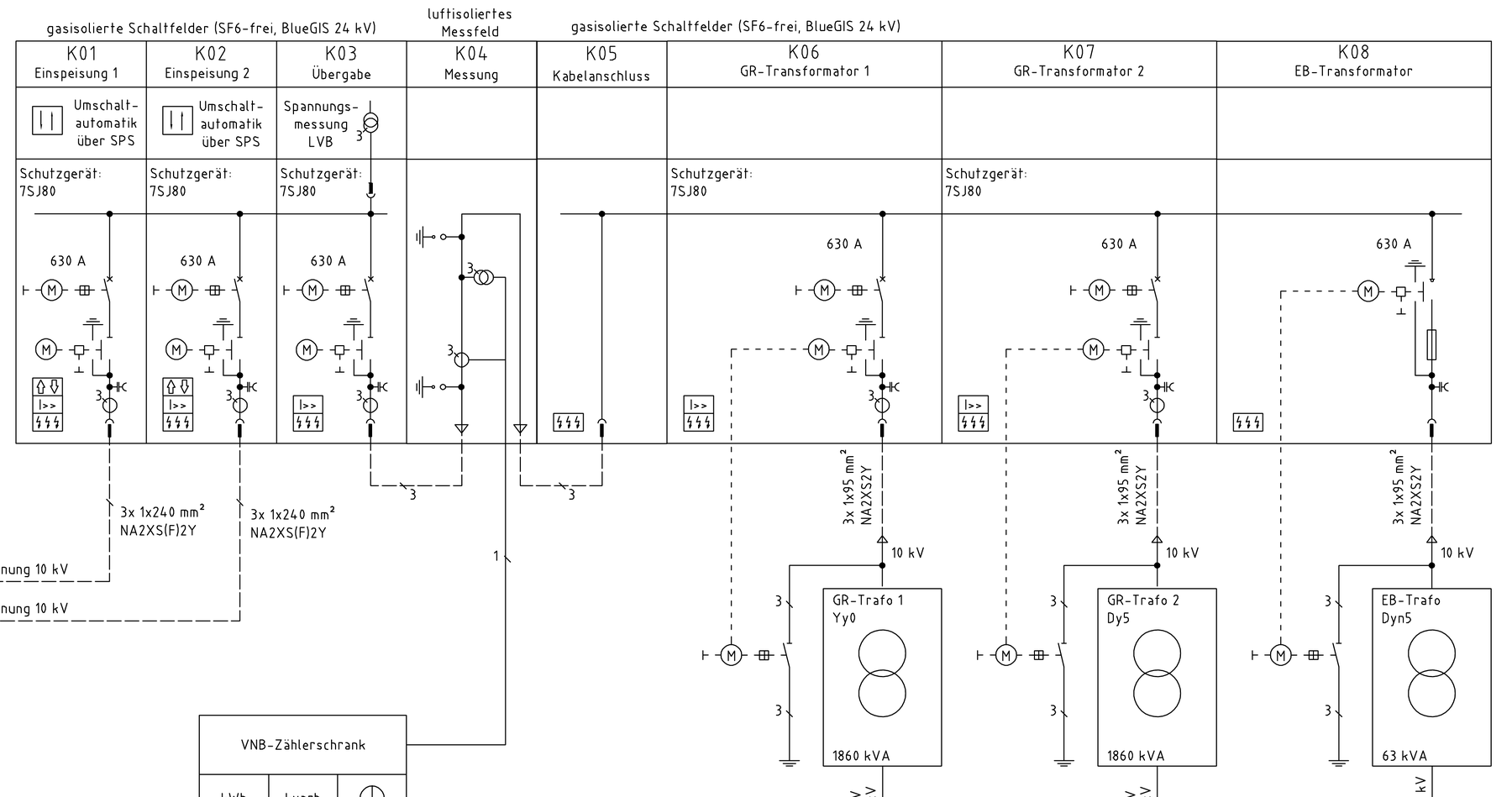
AI to read electrical drawings: part of a German single line diagram showing medium-voltage panels K01 to K08 and three transformers
This is part of drawing 01_03_01 from the LVB Mockau tender, and it shows medium-voltage panels K01 to K08 and the transformers they feed.
The drawing view

See the engine read a single line diagram.

This is the drawing view of Mavlon's AI Quoting Engine, which we are showing here on the public Leipzig tender. Every panel on the single line diagram has a box around it on the drawing. When you click on one, its card shows you what the drawing says, what the bill of quantities says, and the page each one comes from, while marking the items that do not match. The screens you see are a demo built from the public documents, using sample prices.

Two public drawings, read panel by panel

One drawing, two names.

In the United States it is called a one-line diagram, and its symbols follow ANSI and IEEE standards. In Europe, India and most other countries it is called a single line diagram, and it is drawn with IEC symbols. It is the same drawing with the same job: one line stands for all three phases, and the drawing shows every panel, breaker and transformer and how they connect. We read two public examples ourselves, label by label, which is the reading the engine has to do on a customer's package.

8
Medium-voltage panels on the Leipzig drawing
11
Cells on the Ottawa drawing
0
Lines of copyable text on the Leipzig sheet
3
Disagreements with the bill of quantities, checked by hand

The Leipzig sheet is an Übersichtsschaltplan, the German name for an overview single line diagram, from the tender to convert the Mockau traction substation to 750 V. It has no text layer, so a computer cannot copy a single label from it. Every panel name, rating and relay type has to be read from the picture, which is the normal case for scanned and older drawings.

The Ottawa drawing, E201 from a Government of Canada tender, is a clean US-style one-line diagram of a 13.8 kV main-tie-main lineup. It is much easier to read, and it still disagrees with its own written overview about how many cells there are.

Video: MV Switchgear Single Line Diagram: How AI Reads It and Prices the Quote (3:31)
What the drawing settles, and what it does not

The drawing gives you the count. The documents tell you how to build each piece.

A quote needs both, read together. Each row below is one part of a real package and the part of the price it settles.

Single line diagram

It shows how many panels there are, what each one holds, the ratings, and how the sources connect.

The Leipzig sheet shows K01 to K08: two incomers, a handover panel, an air-insulated metering panel, a cable panel and three transformer feeders. The switching devices are marked 630 A.

LVB Mockau tender, sheet 01_03_01
Bill of quantities

It lists the positions you price and how many there are of each.

The Leipzig bill of quantities has 72 positions over 86 pages, from the medium-voltage panels to the 750 V DC track feeders, telecontrol, tests and commissioning.

LVB Mockau tender, Leistungsverzeichnis
Specification

It covers ratings, standards, tests and everything the drawing cannot show.

In Ottawa, section 26 13 13 adds a 25 kA rating, motorized racking on every breaker and an automatic transfer scheme.

Government of Canada tender EP067-162617
Clarifications

These are changes made while the bid is open.

The Leipzig buyer answered bidder questions three times in October 2026, and each round updates the documents.

LVB Mockau tender, Präzisierungen 02 to 05
Other lots

They tell you whose contract each item belongs to.

The Leipzig transformer feeders say the relay is supplied and billed in coordination with lot VE 03, which is a separate contract.

LVB Mockau tender, Leistungsverzeichnis page 17
Where the Leipzig drawing and documents disagree

Eight panels on both. The names and ratings still differ.

K06 and K07

The bill of quantities lists both rectifier transformer feeders as panels rated 24 kV, and then asks for a 12 kV vacuum breaker in each of them. The incomer panels on page 11 ask for 24 kV breakers.

Leistungsverzeichnis pages 11 and 15
K08

The drawing marks the auxiliary transformer feeder 630 A. The bill of quantities asks for a 200 A switch-disconnector with 10 A high-voltage fuses.

Sheet 01_03_01; Leistungsverzeichnis pages 17 and 18
K03

The drawing calls the third panel Übergabe, which is a handover panel. The bill of quantities has no handover panel and lists a Kupplung, which is a coupler built like an incomer with its own protection relay.

Sheet 01_03_01; Leistungsverzeichnis page 13

Each of these is a question for the buyer before the bid closes, not a mistake to fix on your own. The panel count agrees, with eight on the drawing and eight in the bill of quantities, but the names and ratings have to be matched one by one.

What your estimator gets

What comes out, and where it goes next.

The engine turns the drawing and the documents into four things your team can check in minutes, and each one is tied to the sheet or page it came from.

01

Panel schedule

It lists every panel with its devices and ratings, read from the drawing and checked against the bill of quantities.

Sheet 01_03_01K06: feeder for rectifier transformer 1, 630 A, 7SJ80 protection relay
02

Drawing and text check

It shows each item where the drawing and the documents disagree, with both readings side by side.

LV p.15K06 and K07: a 12 kV breaker listed in a panel rated 24 kV
03

Questions for the buyer

It gives you the open points, written so they can be pasted into your clarification request.

LV p.17Is the K08 switch 200 A with 10 A fuses, as listed, or 630 A, as drawn?
04

Configuration for your CPQ

It gives you the approved panel data, ready for Tacton, Salesforce or your own workbook, so nobody types it in again.

After approvalEight panels, field by field
Then the quote

The engine reads, and your engineer decides. When two documents disagree, it carries the more likely reading, shows the other one beside it with its price, and moves the total when your engineer chooses.

What it does not do

It does not draw single line diagrams, and it does not do quantity takeoff from floor plans for electrical contractors. It reads the drawings a customer sends to a manufacturer, and it is not catalogue pricing.

Who this is for

Built for the manufacturer who quotes from someone else's drawing.

Custom work

Mavlon is the right tool when

  • You make medium-voltage switchgear or low-voltage switchboards, and you prepare quotes from customer tenders.
  • You build e-houses, substations, traction power, or data center power equipment.
  • Your sales and proposal team already uses a CPQ, yet they still spend days reading the RFQ first.
  • Your drawings come from many different countries and in more than one language, and some of them are just old scans.
Probably not a fit

Better served by other tools

  • You need to draw or study a single line diagram, which is a job best left to electrical design software.
  • You are an electrical contractor who counts fixtures and cable runs from floor plans, which is a job for takeoff software.
  • You sell standard products from a price list, where a configurator or a catalogue tool is a better fit.

Mavlon makes the AI Quoting Engine, so we are a vendor in this field. Every document fact on this page comes from the two public tenders named here, and you can check each one against its page. Corrections are welcome at atishay@mavlon.co.

Do not take our word for it

Test it on your own drawings, from more than one country.

The fair test uses your drawings, not ours. A useful pilot looks like this.

  1. Pick eight to ten past RFQs your team has already quoted, with drawings from at least three countries.
  2. Include at least one old scan or a drawing that came in as a fax, because those are the hardest to read.
  3. Agree how you will score the reading before anything runs: panel count, devices, ratings and the lineup type.
  4. Score each country separately, so you know where the reading is strong and where it needs work.
  5. Check that every answer points to a sheet or page you can open in a few seconds.
  6. Decide which fields go to your CPQ, and who approves them first.

We set accuracy targets per region during the pilot, on your own drawings, before you decide anything. We do not quote one accuracy number for every drawing in the world, because scans, symbol styles and languages all change it.

What we have published so far
  • In the LVB Mockau tender from Leipzig, we read single line diagram 01_03_01 panel by panel from the image, and we found three places where it disagrees with the bill of quantities.
  • In the Government of Canada tender EP067-162617 from Ottawa, we read drawing E201 cell by cell, and we found three places where the tender disagrees with itself.
  • You can watch a 3.5-minute video of the Ottawa drawing being read and priced.
Can AI read electrical drawings?

Yes, it can read the drawings a manufacturer quotes from. Mavlon's AI Quoting Engine reads single line diagrams, called one-line diagrams in the US, together with the specification and the bill of quantities. It lists every panel and device with the sheet it came from, and it flags where the drawing and the documents disagree. Your engineer checks the result and makes the calls.

What is the difference between a single line diagram and a one-line diagram?

They are the same drawing. One-line diagram is the US name, and it uses symbols from ANSI and IEEE standards. Single line diagram is the name used in Europe, India and most other countries, and it uses symbols from IEC 60617. Both use one line to stand for all three phases and show every panel, breaker and transformer and how they connect.

Can it read a scanned single line diagram with no text layer?

Yes, it can. Many drawings arrive as scans, and the labels have to be read from the image. The Leipzig sheet on this page is one of them. Older and faxed drawings are harder, so we measure accuracy on your own scans during a pilot instead of promising one number.

Does it read drawings in German or other languages?

Yes, it does. The engine reads documents in other languages, so a German Übersichtsschaltplan and an English one-line diagram go through the same steps.

How accurate is it?

It depends on the drawing, and a clean PDF reads better than a twenty-year-old fax. In a pilot we score the reading on your own past RFQs, country by country, so you see the accuracy for the drawings you actually receive before you decide.

Is this electrical takeoff software?

No, it is not. Takeoff software helps contractors count fixtures and cable from floor plans. Mavlon reads the drawings and documents a customer sends to an equipment manufacturer, and turns them into a priced draft quote and a configuration your team checks. It is not catalogue pricing.

Questions

Asked plainly, answered in writing.

See it read a drawing like yours.

Book a short call with us. We will show the engine on a public drawing close to your work, and plan a pilot on your own past RFQs.

Book a Demo