A bid package goes in, and a draft quote comes out, priced the way they price.
How an American manufacturer of engineered waterfront structures taught Mavlon's AI Quoting Engine its own pricing from its past jobs, tested it blind, and now starts every custom quote from a priced draft instead of a blank spreadsheet.
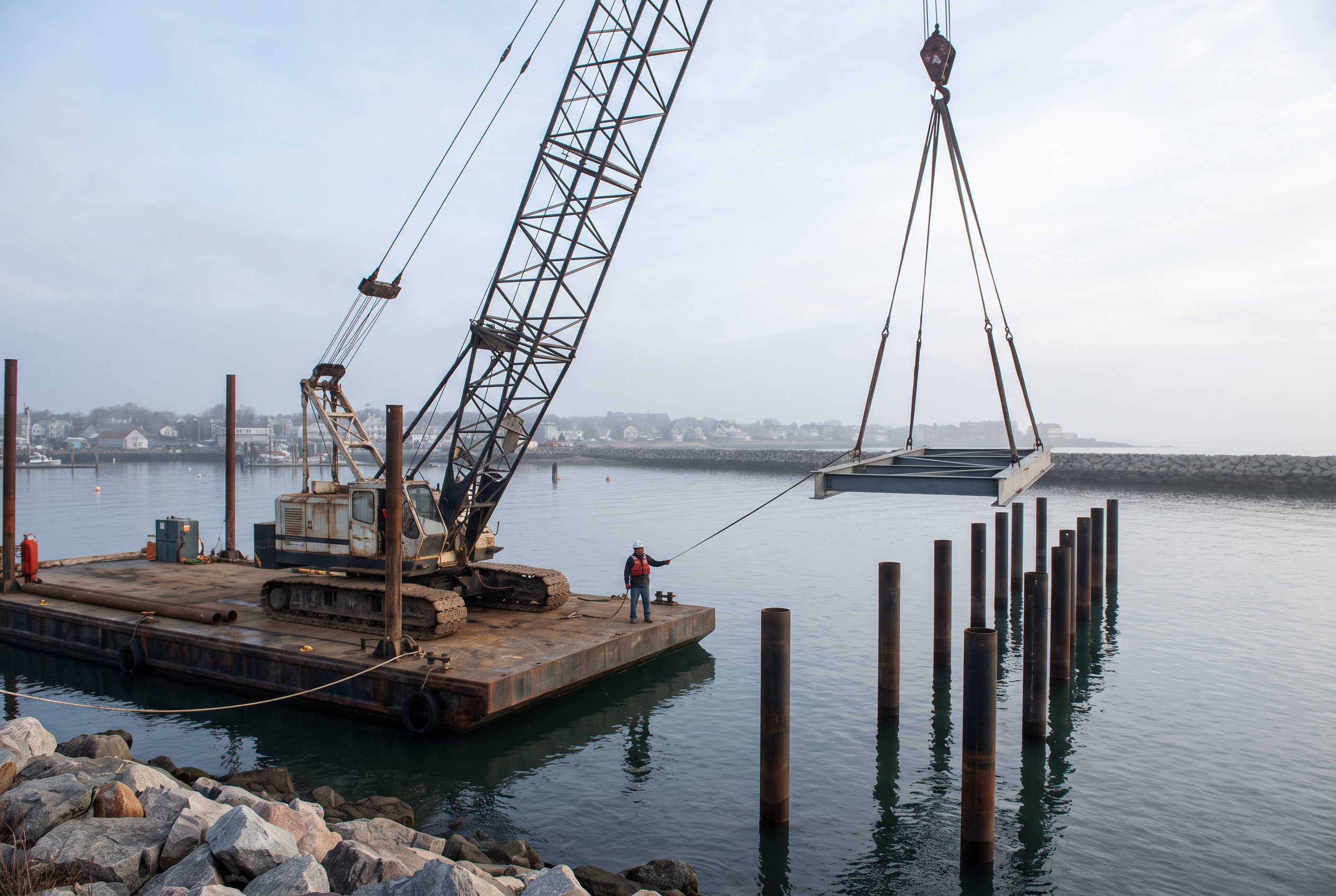
Standard jobs priced quickly, but custom jobs took hours.
The company's standard products are priced from a rate card, and that part of the business runs well. The trouble was custom work, which is where most of the requests and most of the value sit. A custom quote took an estimator an hour or two, and half a day when the job was complex.
The reason is the way the work arrives. The company sells largely through specifications: consulting engineers design its products into their own drawing sets, often with the words “or approved equal”. So a request is rarely a simple question. It is somebody else's bid package, with somebody else's drawings, conventions and specification sections, and an estimator has to read all of it before there is anything to price.
The pricing itself lived in costing spreadsheets, one for each product family, and in the heads of the people who built them. There was no database of past jobs to look things up in, and a new estimator could only learn the rules by asking the people who already knew them.
The goal was easy to state: a priced draft quote, in the company's own pricing, for every custom bid package that arrives, so the estimator starts from a finished draft instead of from page one.
Learned from their own past jobs
The company shared past bid packages together with the quotes it had sent back, its costing spreadsheets with their formulas, and its written cost model. We rebuilt the costing for each product family until it reproduced the totals on those past quotes. Where a past quote did not match, the gap was usually a rule the estimators followed without ever writing it down, and each one was either confirmed with the company or turned into a question the draft asks.
Tested blind before it went live
A set of past jobs was kept apart from the start. The engine never saw those packages while it learned, and it never saw the quotes the company had sent for them. It then priced each one from the raw documents, and the drafts were scored against the real quotes, using a pass bar agreed in writing before anything ran.
A draft the estimator can check line by line
Every line of the draft keeps the page it came from. Where the package does not settle something, the line says TBD instead of guessing. Where the documents can be read two ways, both readings are priced, and the estimator can switch between them and watch the total move. Anything the documents cannot answer becomes a question for the customer, already worded for the reply.
People stay in charge
The engine does not design anything, and it does not decide the price. The company's engineer still designs and seals every job, and an estimator reviews every draft, changes what they know better and decides what goes to the customer. The company owns the database the engine works from.
Within about 2 to 3 percent on familiar work
On jobs in a product line the engine has learned, which match work the company has quoted before, the draft total lands within about 2 to 3 percent of the price its estimators sent.
About 10 to 15 percent on brand-new jobs
On very new jobs with many add-ons, the drafts land within about 10 to 15 percent. That wider spread is expected. These are the jobs where the documents leave the most open, and where the draft hands the most decisions to the estimator, each one already priced.
A draft in minutes instead of hours
A custom quote used to take an hour or two of reading and pricing, and half a day for a complex one. The priced draft now arrives within minutes of the upload, so the estimator's time goes to the decisions the package leaves open.
The same rules on every quote
Because every draft follows the company's own costing, two estimators starting from the same package start from the same numbers. The rules that used to live with a few people are now written down where the whole team can see them.
The pricing rules were always there. They just lived in spreadsheets and in a few people's heads.
The same problem shows up wherever products are built to someone else's specification.
Any company that builds to order from a customer's bid package has two jobs before it can quote: read somebody else's documents, then price them its own way. That is true for switchgear builders and for water and wastewater equipment makers, and the worked examples in our guides show the same kind of draft for e-houses, lift stations, battery storage, heat exchangers and pressure vessels, each built from a public bid package with sample rates.
For the question that comes even before a quote, whether a request can be made at all, see our work with the Montanstahl Group across three steel plants.
See a draft quote in your own pricing.
In a demo we walk through a draft the engine produced from a real bid package, line by line, and show how it would learn your prices from your own past jobs.
Book a Demo