Data Center Generator Sizing: From the Spec to a Priced Quote
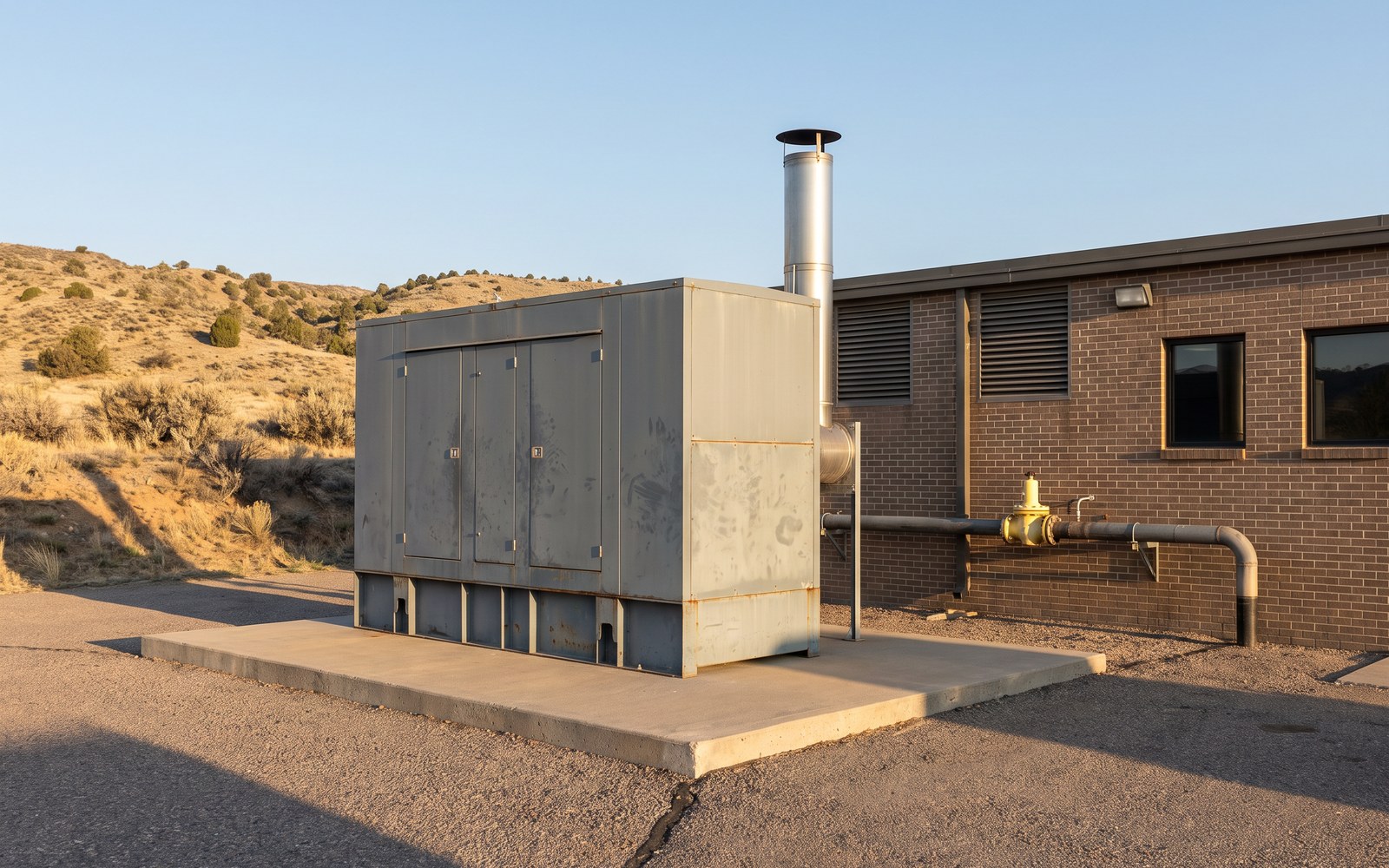
If you have quoted a standby generator before, you know that the size printed on the drawing is not always the size the building actually needs. In this public bid package, the main electrical drawing shows a 300 kW generator, the engineer's own calculation sheet says the building needs at least 298 kW, and the bid advertisement names a 350 kW unit.
Those three numbers show what data center generator sizing looks like from the seller's side. Only one of those numbers can go on the quote, and in our example draft quote, choosing between the last two changes the price by $27,800.
This guide walks you through that decision from the seller's side. It covers how the engineer got the number, why the package ends up with three different numbers, which other lines in the specification are really sizing decisions, and how all of this becomes a priced draft quote with questions for the owner.
I wrote this for applications engineers, estimators and sales engineers at generator dealers, packagers and power module builders, and for the managers who sign their quotes.
The example quote uses sample prices and rates. It shows how you build a quote, not what this generator should cost. If your shop also quotes the gear around the generator, you can find the same approach for paralleling gear in our guide to paralleling switchgear quotes.
The package: a standby generator for a college data center
Red Rocks Community College in Lakewood, Colorado, put this job out to bid in late 2025. They issued the specifications for bid on October 20, 2025, and bids were due on December 19, 2025. The advertisement gives an estimated construction cost of $670,000 for the whole project.
The advertisement describes the work in one sentence. The college wants "a new standby generator to be installed to serve the data center and additional loads", along with a new transfer switch, which moves the load from the utility to the generator when the power fails, and a new distribution panel.
"Basis of design is a CAT Natural Gas Generator DG350."
Red Rocks Community College, Advertisement for Bids, page 1The basis of design is the specific model the engineer based the design on. Other manufacturers can still bid, as long as their unit meets the specification. Caterpillar rates the DG350 at 350 ekW, which means 350 kilowatts of electrical output.
The package is about 291 pages across five files:
- The specification book is 174 pages. The generator is in section 26 32 13 and the transfer switch is in section 26 36 00.
- The drawing set is 26 pages. It includes the engineer's one-line diagram, the sizing table, the Caterpillar cut sheet and Caterpillar's own sizing report.
- The bidder information and forms run to 84 pages, and the advertisement runs to 6.
- Addendum 1 is a single page of questions and answers.
Two of the drawings matter most for sizing. The one-line diagram on sheet E50 is the main electrical drawing: it shows each major piece of equipment, how power flows between them, and the rating of each one. The sizing table on sheet E60 is the engineer's calculation of how much power the generator has to supply.
The bid form asks for one lump sum. Addendum 1 says plainly, "There are no alternates."
Most bidders on a job like this are electrical contractors. The generator dealer or packager quotes the equipment package to them, and that equipment quote is the one we build in this guide. In this guide, page numbers refer to the PDF page of the specification book unless a drawing sheet is named.
How the engineer did the data center generator sizing
Sheet E60 carries a table called "Generator Size Calculation and Starting Sequence". It is the most useful page in the package for a quoter, because it shows every step of the engineer's thinking.
The running load
The table lists the loads in two starting sequences. The first sequence is the data center itself:
| Sequence | Load | Running kW | Starting kVA |
|---|---|---|---|
| 1 | UPS | 48.0 | 57.6 |
| 1 | PDU | 48.0 | 57.6 |
| 2 | Chiller CH-3 | 72.0 | 180 |
| 2 | Two chilled water pumps | 7.8 | 20.0 |
| 2 | Controls, glycol feeder, computer circuits and two freezers | 26.1 | 70.2 |
| Total running load | 202 |
Here is what the terms in that table mean. The UPS is the battery system that keeps the servers running for the few seconds before the generator takes over, and the PDU is the unit that feeds power to the server racks. Running kW is the power a load uses once it is up and running. Starting kVA measures the much bigger burst of current a load draws for a moment right when it switches on.
The chiller matters as much as the computers. It is the single biggest load, and it is also the hardest one for the generator to start, because a motor draws far more current for a moment than it does while running.
Spare capacity and a safety factor
The engineer then adds 10 percent spare capacity for future loads, which is 20.2 kW, and a 20 percent safety factor on top of that, which is 44.4 kW. That brings the running load to about 266 kW before any correction for the site.
The derate for altitude and heat
A generator makes less power in thin air and hot weather, so the engineer corrects for both. The campus sits at 5,800 feet. The table takes off 3 percent for every 1,000 feet above 3,300 feet, which leaves 93 percent. It also takes off 1 percent for every 10 degrees above 77°F, up to a design temperature of 110°F, which leaves 97 percent.
Together, the table rounds these to a net factor of 89 percent of the nameplate rating. Dividing 266 kW by 0.89 gives the minimum nameplate the site needs.
"Net generator nameplate sizes after deration ... 329 kVA ... 298 kW ... 651 Starting kVA"
Red Rocks Community College, sheet E60, Generator Size Calculation and Starting SequenceStarting load, not only running load
The starting column is easy to skip, and you should not skip it. The table works out the worst moment as the second group of loads starting while everything is already running: 223 kVA of running load plus 270 kVA of starting load, which is 493 kVA. Adding the same spare and safety margins gives 651 kVA. A generator that can carry 298 kW of running load may still struggle to start the chiller while the UPS is already on it.
The table also notes that 48 percent of the load is harmonic. UPS systems draw current in short, sharp pulses rather than a smooth wave. That distorted current heats up the generator's alternator, which is the part that turns the engine's motion into electricity, and it also distorts the voltage. Because of this, generators that feed UPS loads often need a larger alternator than the kW number alone would suggest.
What NFPA 110 Level 2, Class 2, Type 60 means here
The top of the table names the standby system as NFPA 110 Level 2, Class 2, Type 60. NFPA 110 is the US standard for emergency and standby power systems. In plain words, Level 2 means the loads are important, but a failure is less dangerous to human life than something like hospital life safety equipment. Class 2 means the generator set must be able to run for at least two hours at its rated load without refueling. Type 60 means the power must come back on within 60 seconds.
Larger data centers often ask for faster restoration than this. For a quoter, the point is simply to read these three labels before you choose a model, because they change what the generator and its controls must do.
Rebuild the engineer's sizing table in your own sheet before you look at the one-line. Check the running load, the starting load, the margins, the harmonic share and the derate, and write down which page or sheet each number came from.
How one package gives three generator sizes
Once you have the engineer's 298 kW in hand, the rest of the package gives two more numbers, and neither of them is 298.
- Sheet E50, the one-line diagram, labels the generator "480/277V, 300KW/375KVA". That is a standard size just above the engineer's minimum.
- The advertisement and the Caterpillar cut sheet name a DG350, rated "350 ekW (437.5 kVA)". That is the next size up.
- Caterpillar's own sizing report, also in the drawing set, models the DG350 at the site. It lists a site output rating of 350 ekW at 5,800 feet and a final running load of 221.6 kW, which uses about 63 percent of the unit.
Notice a small detail in that last point. The engineer's rule of thumb takes 11 percent off for altitude and heat, while the manufacturer's report for this particular model shows its full rating at the site. Rules of thumb are a sensible way to set a minimum, but the manufacturer's data for the model you actually offer is what proves the size.
What the gap does to the quote
The specification does not lock you to Caterpillar. Page 131 lists five acceptable makers: Caterpillar, Cummins, Kohler, MTU and Generac. So a bidder can offer any of them, at 300 kW or at 350 ekW, and the price changes with the choice.
In our example draft quote, the 350 ekW basis of design costs $217,300 and a 300 kW set costs $189,500. The difference is $27,800, about 8 percent of the quote.
The draft carries the 350 ekW basis of design. The sizing report in the package checks that unit against the real loads, including the starting sequence, so it is the reading the engineer has already tested.
It also prices the 300 kW reading beside it, so the estimator can see what a lower bid would look like. Quoting 300 kW would match the one-line and the engineer's minimum. But you would want the engineer to confirm in writing that the smaller set still meets the 651 kVA starting load and the performance limits in the specification.
Here is one honest note on our example: the call moves only the generator line. In a real quote, the load bank would follow the generator size too, because the specification sizes it at 100 percent of the generator's rating.
When a package gives more than one generator size, price both, carry the one the engineer has already tested, and send a question that names the sheet, the page and the money.
What the manufacturer's sizing report adds
It is unusual to find the manufacturer's own sizing report inside a public bid package, and this one is worth reading slowly. It shows how Caterpillar checked the DG350 against the same loads the engineer listed, step by step.
The report models the UPS as a single 100 kW load, close to the 96 kW of UPS and PDU on the engineer's table. It puts the final running load at 248.1 kVA, or 221.6 kW, and the largest single load step at 397.5 kVA of starting load.
The report also measures the harmonic side of the load. For the UPS, it assumes a common input design called a six-pulse rectifier, which draws distorted current. It puts that distortion at 29.1 percent, and it reports a maximum non-linear running load of 173.6 kVA. These are the numbers that decide whether the alternator is big enough, and they rarely show up anywhere else in a bid package.
"The selected gas generator set performance may vary when applying a UPS ramp load to this generator set."
Caterpillar sizing report, Red Rocks bid drawing set, page 23That sentence is a warning worth passing on. When power fails, the UPS hands its load back to the generator over a few seconds rather than all at once, and how smoothly that happens depends on the UPS settings as much as on the generator. If you quote a different make or size, run your own maker's sizing report on the same loads, and ask the UPS supplier how its rectifier ramps up.
Put the engineer's table and the manufacturer's report side by side. Check that the running load, the largest load step and the harmonic load agree, and quote only a model whose own report covers all three at the real site conditions.
What natural gas changes in the quote
This generator runs on natural gas from the utility, so there is no fuel tank to size or price. That removes one of the biggest lines in a diesel quote, but it brings two questions of its own.
The first is gas supply. A generator needs a certain gas pressure and flow at its regulator to carry the load and start the motors. The package includes a fuel gas piping section, but it does not say what pressure or meter capacity is available at the site. If the meter is too small, someone has to arrange an upgrade with the gas utility, and that cost belongs to whoever the contract names, not by default to the equipment supplier.
The second is how the engine accepts load. Gas engines usually take on large, sudden loads less readily than diesel engines of the same rating, which is one more reason the starting load on sheet E60 matters. The Caterpillar report lists the DG350's certification as US EPA stationary emergency, which also limits how many hours a year the set may run outside emergencies.
The sizing lines that are not kilowatts
A generator quote is not only a kW number. Several other requirements in section 26 32 13 decide how big, or how special, the equipment has to be, and each one changes the price.
Two sets of performance limits in one section
Page 131 sets ordinary performance limits. The voltage must stay within 3 percent from no load to full load, and a 50 percent step in load may move the voltage by no more than 20 percent, recovering within 3 seconds.
Page 132 then sets much tighter limits under the heading "Generator-Set Performance for Sensitive Loads". The voltage band shrinks to 1 percent, the dip allowed for a 50 percent step falls to 10 percent, and recovery must happen within half a second. The sustained short-circuit current rises from 250 percent to 300 percent of rated current.
"Oversizing generator compared with the rated power output of the engine is permissible to meet specified performance."
Red Rocks Community College, specification section 26 32 13, page 132Both sets are in the section. A data center UPS is exactly the kind of sensitive load the second set was written for, so the stricter limits probably apply. Meeting them can mean a larger alternator on the same engine, which is a real cost and a question worth asking.
The altitude range
Page 130 asks for operation from "Sea level to 5,600 feet". The engineer's table and the Caterpillar report both use 5,800 feet, which is the real elevation of the campus. Quote the equipment for 5,800 feet and say so in the clarifications.
The load bank
Page 136 asks for a permanent, outdoor load bank that can load the generator "at 100% rated-system capacity, at 80% power factor, lagging". A load bank is a large set of heating elements that puts an artificial load on the generator, so you can test it at full power without disturbing the building. Power factor describes how much of the current does useful work, and 80 percent is the point where generators are usually rated. Reaching that 80 percent mark requires coils as well as heaters, so this unit has both, plus a remote control panel and its own weatherproof enclosure. Because the load bank is sized to match the generator, the generator size you quote sets the load bank size too.
The factory test
Page 140 says the generator must be factory tested "at rated load and rated PF", and adds that sets "that have not been factory tested at rated PF will not be acceptable". Page 138 gives the owner the right to watch, on 14 days' notice. A test at full rated power factor needs reactive load at the factory, so check that your supplier can do it before you price it.
Sound and enclosure
Page 133 asks for a critical-grade muffler, with sound of 85 dBA or less at 10 feet from the exhaust. Page 137 asks for a vandal-resistant steel housing, wind resistant up to 100 mph, with automatic dampers and both AC and DC interior lighting. The specification sets no sound limit for the enclosure itself, which is worth confirming.
The example draft quote, line by line
Here is an example draft for the equipment package, laid out the way our AI Quoting Engine lays one out and priced with sample prices, a sample field service rate of $1,650 a day and a 22 percent margin. It has twelve lines: nine are priced, two are marked by others, and one is TBD.
| Line | Qty | Amount | Where the package asks for it |
|---|---|---|---|
| Natural gas standby generator set, 350 ekW, outdoor enclosure, critical muffler | 1 | $217,300 | Pages 130, 133 and 137 |
| Transfer switch, 400 A, 4-pole, bypass-isolation, drawout, closed transition | 1 | $41,200 | Pages 146 and 147, sheet E50 |
| Permanent load bank, 100% at 0.8 power factor, remote control panel | 1 | $48,600 | Pages 136 and 137 |
| Seismic isolation and certification | 1 lot | $7,400 | Pages 129 and 137 |
| Factory test at rated load and power factor | 1 lot | $5,200 | Pages 138 and 140 |
| Start-up, site testing and training | 3 days | $4,950 | Page 140 |
| First-year maintenance with quarterly exercising | 1 year | $9,800 | Pages 129 and 130 |
| Submittals, sizing report and manuals | 1 lot | $3,600 | Pages 128 and 129 |
| Freight to site | 1 lot | $4,600 | |
| Testing firm and power studies | By others | Page 107 | |
| Gas piping, concrete pad and feeders | By others | Sheet E50 | |
| Remote radiator, if required | TBD | Pages 133 and 139 | |
| Total | $342,650 + TBD |
The generator set
The largest line carries the 350 ekW basis of design, with the outdoor weatherproof enclosure from page 137 and the critical muffler from page 133. The call described above sits beside it.
The transfer switch
Key note 5 on sheet E50 says "PROVIDE 4-POLE BYPASS ISOLATION AUTOMATIC TRANSFER SWITCH". A bypass-isolation switch adds a second, manual path for the power, so a technician can take the transfer switch out for maintenance without shutting down the data center. Pages 146 and 147 add a drawout arrangement, which means the switch slides out on rails, and closed-transition operation, which means the switch briefly connects the utility and the generator together so the load never sees a drop in power when utility power returns.
Each of those features costs more than a plain transfer switch. Closed transition also usually needs the utility's acceptance, which is a question for the owner rather than a line in your price.
The one-line also shows a 400 A generator breaker feeding a 400 A transfer switch. That suits the engineer's minimum of 396 A at 480 V. A 350 ekW set can deliver about 526 A, so if you offer the larger unit, confirm the breaker rating the engineer wants.
Seismic isolation
Page 137 asks for restrained spring isolators "with seismic restraint", and page 129 asks for the manufacturer's seismic qualification certificate. The isolators are heavy springs under the generator that stop its vibration from reaching the building and hold it in place during an earthquake. That line item in the quote covers both parts.
Start-up, training and the first year
Page 140 asks the supplier to train the college's staff for at least 4 hours. Page 130 asks for "12 months' full maintenance by skilled employees of manufacturer's designated service organization", with quarterly exercising, and page 129 asks for a service center that can reach the site within eight hours. That last requirement quietly decides which dealers can bid at all.
What the draft leaves to others
Page 107 says the contractor "shall engage and pay for the services of a recognized corporately and financially independent Testing Firm". The draft marks that line, and the power studies that go with it, as work by others, because the electrical contractor buys them, not the equipment supplier. The gas piping, the concrete pad and the feeders are marked the same way.
Writing these lines down costs nothing. It stops the contractor from assuming they are inside your price.
The remote radiator
Page 133 asks for a radiator "factory mounted on engine-generator-set mounting frame". Page 139 then says "Install remote radiator with restrained spring isolators ... on concrete base on grade." A remote radiator means a second base, piping and more coolant, so the draft prices the mounted radiator, writes the remote one as TBD, and asks.
Two calls, one TBD, and the questions for the college
An open decision in the package becomes a call in the draft. The engine carries the more likely reading and prices the other one next to it, so the estimator can switch and watch the total move.
| Call | Carried reading | Other reading | Total if switched |
|---|---|---|---|
| Generator size | 350 ekW basis of design | 300 kW, as the one-line, $27,800 less | $314,850 + TBD |
| Load bank | Included, as the specification | Left out, as the drawings, $48,600 less | $294,050 + TBD |
The load bank call deserves a word. Section 26 32 13 describes the load bank in full, but none of the drawings show where it sits or how it is fed. Carrying it is the safer reading, because leaving it out risks supplying it later at your own cost.
Everything the documents cannot settle becomes a question, written so it can go straight into a reply to the college:
- Sheet E50 shows a 300 kW generator and the advertisement names a 350 ekW DG350 as the basis of design. Which size should we offer?
- Section 26 32 13 asks for a permanent load bank on pages 136 and 137, and no drawing shows one. Is it in the base bid, and where does it sit?
- Page 133 asks for a unit-mounted radiator and page 139 asks for a remote radiator on its own base. Which one do you want?
- Which performance limits apply: the ordinary ones on page 131 or the limits for sensitive loads on page 132?
- What gas pressure and meter capacity are available at the site, and who arranges any upgrade with the utility?
- Who gets the utility's acceptance for closed-transition transfer?
- If the 350 ekW set is accepted, should the generator breaker stay at 400 A?
Packages like this one often contain a few lines that came from another project. Page 14 describes a base bid and an alternate for replacing a chiller and chilled water pumps, which have nothing to do with this job. A bidder asked about it, and Addendum 1 answered, "There are no alternates." Reading every page is how you find these before they find you.
Data center generator sizing checks before you send the quote
Before the quote goes out, you need to settle these sizing points with the owner or write them into your clarifications:
- The running load, the starting load and the starting sequence match the engineer's table, and the model you offer can start the largest motor with the UPS already on line.
- The harmonic share of the load is known, and the alternator is sized for it.
- The site altitude and design temperature in your offer match the real site, not only the range written in the specification.
- The rating type is clear. A standby rating assumes the generator runs only during power outages, for a limited number of hours each year. This job asks for a standby set, while some data center buyers ask for ratings that allow unlimited running hours, such as prime or continuous ratings.
- You know which performance limits apply, and whether meeting them needs a larger alternator.
- The load bank, if included, is sized to the generator you are actually offering.
- The factory test at rated power factor is available from your supplier.
- Every line you leave out is written down as work by others or as TBD.
Turn this list into a page of your quote called "Basis of the offer", and state the size, the rating type, the site conditions and the performance limits your price assumes.
Why the size you quote matters more right now
Data center demand has made generators scarce. On Generac's earnings call in February 2026, its chief executive said that "our competitors today are out kind of 2 years on deliveries."
When lead times are that long, a quote that names the wrong size is hard to fix later. Changing the size after the award can mean a new order and a new place in the queue, so the sizing decision deserves the most care before the bid goes in, not after.
How Mavlon's AI Quoting Engine drafts a quote like this
Mavlon's AI Quoting Engine reads the whole bid package, ties each requirement to its page, and turns it into a priced draft quote in your own pricing. It learns that pricing from your past bid packages, the quotes you sent and your costing workbooks, so the draft comes out the way your team would have priced it.
Every line keeps its page. Lines the package does not settle say TBD. Decisions the documents leave open come back as calls priced both ways, and questions for the owner are written and ready to send.
The estimator stays in charge of the quote. The engine does not choose the generator size, decide compliance or set the final price. If you would like to test it on your own past quotes first, the method is on our pilot page, and the same kind of draft for other power equipment is in our guides to e-house specifications and battery storage specifications.
Sources
- Red Rocks Community College, Replace/Upgrade Emergency Generator, specifications issued for bid, October 20, 2025, 174 pages.
- Red Rocks Community College, Generator Addition, bid drawing set, 26 pages, including sheets E50 and E60, the Caterpillar DG350 cut sheet and the Caterpillar sizing report.
- Red Rocks Community College, Advertisement for Bids, RRCC 26-08-IFB01C, 6 pages.
- Red Rocks Community College, Addendum 1, vendor questions and answers, 1 page.
- The Motley Fool, Generac Q4 2025 earnings call transcript, February 11, 2026.
Found a mistake? Write to atishay@mavlon.co and we will fix it.
See the AI Quoting Engine draft a generator quote
If your team quotes standby generators or power modules for data centers, book a demo. We will show you the AI Quoting Engine turning a bid package into a priced draft quote in your own pricing, with the page behind every line, the open calls with their prices, the TBD lines and the questions for the owner.
Or see how we test it blind on your own past quotes: the pilot protocol.
Book a demo