Pressure Vessel Bid Package Benchmark
We tested how well the reading step of Mavlon's AI Quoting Engine reads pressure vessel bid packages, using ten public packages from the United States, Bolivia, Canada and Kenya. It matched 299 of 305 checks against answer keys written before the runs and found 95 of the 98 contradictions in the keys.
Pressure vessel shops ask a fair question before they let any AI near a quote: can it actually read our packages? A vessel request is rarely one data sheet. It is a specification, an owner standard, drawings, addenda that change the first three, and a bid form, and the price depends on lines scattered across all of them. So we built a test that anyone can check. We took ten public bid packages from the United States, Bolivia, Canada and Kenya, wrote down what each one says before any run, and then let the reading step of Mavlon's AI Quoting Engine read each package once.
This page shows every score, every miss and every answer key, so you can judge the result yourself.
Can AI read a pressure vessel bid package? What this test measures
The test checks the reading that an estimator does before anyone prices a vessel. For each package, the answer key holds 21 to 38 checks, which makes 305 in all. Every check is something that changes the price, and every one is tied to a short quote and the page it came from. For example, we check these items:
- We check the design pressure and temperature, the MDMT (the coldest metal temperature the vessel must be safe at) and any vacuum rating.
- We check the code, the U stamp and National Board registration, and who inspects.
- We check the materials, the corrosion allowance, radiography, heat treatment after welding (PWHT) and impact testing.
- We check the nozzles, supports, lining, coating and pressure test.
- We check the documents, the delivery terms and the warranty.
- We check which document governs when an addendum changes an earlier value.
The test also checks the contradictions, which are the places where one document says something different from another. Every key lists the contradictions we confirmed before the runs, and there are 98 in total across the ten packages.
How the test was run
We wrote every answer key first. Mavlon prepared the keys with AI help before any run, quoting the exact words and page for each check, and a script then compared every quote with the page it cites. A member of our engine team spot-checked a random sample of the keys against the documents and found them correct.
Then the system read each package once, with no reruns and no hints. The reading step worked inside a closed folder that held only that package, with no internet and no access to the keys. It had to find the vessels on its own, read every document, and write down what it found with the file and page for each value.
A separate reader then scored each run against its key. The scoring is strict: an answer that was only partly right counts as a miss. That reader also opened the pages behind every contradiction the run flagged and marked each one as holding up, not holding up, or unclear.
The results
Across the ten packages, the reading step matched 299 of 305 checks. It found 95 of the 98 contradictions in the keys. The packages ran to 4,724 pages in total, and each one took between 11.7 and 29.8 minutes to read.
| Package | Language | Pages | Checks right | Key contradictions found | Flagged contradictions that held up | Minutes |
|---|---|---|---|---|---|---|
| Thornton, Colorado, United States | English | 2,210 | 32 / 35 | 11 / 12 | 15 / 18 | 24.7 |
| LSU AgCenter, Louisiana, United States | English | 376 | 33 / 35 | 15 / 16 | 26 / 31 | 22.4 |
| University of Arizona, United States | English | 35 | 25 / 25 | 5 / 5 | 8 / 14 | 11.9 |
| Madison, Wisconsin, United States | English | 640 | 32 / 32 | 9 / 9 | 13 / 21 | 24.2 |
| Fermilab, Illinois, United States | English | 52 | 30 / 30 | 6 / 6 | 9 / 20 | 11.7 |
| Olivehurst, California, United States | English | 323 | 32 / 32 | 18 / 18 | 18 / 25 | 15.2 |
| Federal Bureau of Prisons, Terre Haute, Indiana, United States | English | 119 | 25 / 25 | 3 / 3 | 8 / 17 | 19.5 |
| YPFB, Bolivia | Spanish | 539 | 38 / 38 | 9 / 9 | 14 / 24 | 29.8 |
| National Research Council, Ottawa, Canada | English | 128 | 31 / 32 | 9 / 9 | 16 / 23 | 20.7 |
| Geothermal Development Company, Kenya | English | 302 | 21 / 21 | 10 / 11 | 17 / 22 | 21.3 |
Everything it did not get fully right is listed here, so nothing hides behind the totals:
- Thornton: On connections, the run gave the flanged and threaded connection rules, but it left out the requirement to reinforce every opening to the ASME code.
- Thornton: On the surge P&ID scope, the run read the Q&A saying everything on the surge P&ID is vendor supplied, but it wrongly said the revised P&ID was not in the package, so it never noticed that the revised sheet puts four vault sump pumps in the vendor's scope.
- Thornton: On Buy America, the run caught the tariff adjustment clause, but it never said whether a Buy America or domestic content rule applies (none does).
- Thornton: It did not flag one contradiction in the key: Sump pumps: tags and supply responsibility.
- LSU AgCenter: On Check 11 (bolting and gaskets), the run got the bolting right, but it never gave the gasket specification for the evaporators and calandrias (304 SS/Teflon spiral wound Flexitallic type CGI).
- LSU AgCenter: On Check 35 (skid general arrangement), the run did not give the skid size (18'-0" by 9'-3 3/4") or mention the platform, railings and caged ladder on the general arrangement.
- LSU AgCenter: It did not flag one contradiction in the key: Upper shell length.
- National Research Council: On Check 7 (vacuum), the run found the clause saying the vessels are designed for full vacuum, but it treated it as only implied and asked whether vacuum design is needed, instead of stating it is required.
- Geothermal Development Company: It did not flag one contradiction in the key: Are SS4, SS8 and SS9 existing or new separators?.
The contradictions it flagged, and how many held up
The reading step flagged 215 contradictions of its own. When we checked the pages, 144 held up, 39 did not, and 32 were unclear. Most of the ones that did not hold were judgement calls rather than misreadings. For example, it treated a one-year warranty that the contract adds on top of a three-year warranty as a conflict, and it treated a requirement written for one item as clashing with a different item. The unclear ones rest on its own arithmetic or reading of a drawing, which the documents alone cannot settle.
We publish this number because a long list of possible problems is only useful if most of them are real. In a draft quote, every flagged contradiction becomes a question for the customer, and an estimator can drop the ones that do not matter in seconds.
Where the reading found more than our keys
Of the contradictions that held up, 59 were not in our keys at all. Here are three of them:
- University of Arizona: The drawing says the main nozzle can be as small as 4 inches, but even twelve 4-inch nozzles fall short of the 160 square inch rule in the text, so that minimum is never acceptable.
- Geothermal Development Company: The manufacturer authorization form asks the vessel maker to warrant design, installation and commissioning of power plant equipment 'at Paka', a different project, while the defects period is left blank.
- Thornton: The '42-inch blind flange' detail for the manway is drawn only 39-3/4 inches across with a 37-1/8 inch bolt circle, which is too small to close the 42-inch minimum opening the spec asks for.
What makes a vessel package hard to read
The hardest packages were not the longest ones. These were the things that made reading hard:
- Addenda that rewrite the vessel. In Thornton, Colorado, an addendum replaced one tank at 150 psig with two vessels that need a design pressure of at least 420 psig, while the main specification book and the drawings still show the old design.
- Tracked changes inside the PDF. In Madison, Wisconsin, and Olivehurst, California, struck text is still in the text layer. A safety factor of 4 changed to 3.5 reads as "43.5" unless you look at the page.
- Scans and drawings with no text. In Terre Haute, Indiana, the scope and both drawings are scans, and in Ottawa the whole vessel specification sits on drawing sheets with no text a computer can copy.
- Check boxes drawn as pictures. On the LSU and Bolivian data sheets, the code stamp and heat treatment ticks are graphics, not text.
- Documents that are referred to but missing. The Ottawa data sheet, two Madison addenda and several Thornton drawings are cited, but they are not in the public package, so the right answer is to ask for them.
- Language and size. The Bolivian package is in Spanish, and the Thornton package runs to 2,210 pages.
What this test does not measure
This test measures reading, not design or pricing. The reading step does no ASME code calculations: wall thickness, MAWP and nozzle reinforcement stay with your engineer and your design program, such as COMPRESS. Pricing depends on each shop's own rates and past jobs, so we test it separately, on a shop's own past packages, before any live bid. Our pilot protocol explains how that test works, and the pressure vessel page shows how the reading turns into a priced draft quote.
How to test any tool on your own vessel packages
You can run the same test on any AI tool with packages you have already quoted.
- Pick five to ten past vessel packages where you know what the customer asked for.
- Before the tool sees them, write down the price drivers and the conflicts you found, each with its page.
- Give the tool each package once, with no hints, and keep the result as it comes out.
- Score it strictly, so a half-right answer counts as wrong.
- Open the page behind every conflict it flags, and count how many are real.
The pressure vessel cost estimation spreadsheet has a data sheet tab you can use as the answer key.
Package by package
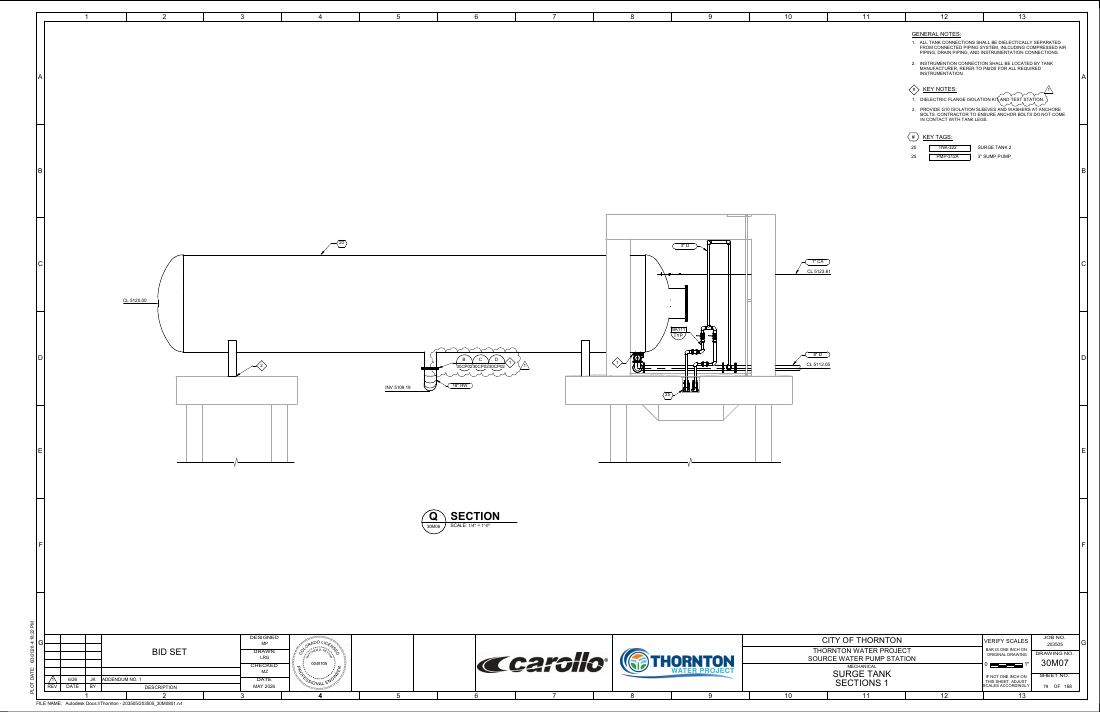
Thornton, Colorado, United States
Source: The source is the City of Thornton, Colorado, Thornton Water Project, Source Water Pump Station, IFB / Project No. 12-777XP (hydropneumatic surge tanks TNK-321 and TNK-322 with air compressor and receiver), 2026.
What made it hard: Addendum 2 deleted the original vessel section and replaced it, so one tank at 150 psig became two vessels with a design pressure of at least 420 psig. The main specification book and the drawings were never updated to match, and the drawings show the tanks in a vault on saddles while the new text says they are buried.
Result: The run got 32 of 35 checks right and found 11 of 12 key contradictions, and 15 of the 18 contradictions it flagged held up. It took 24.7 minutes.
One find beyond the key: The '42-inch blind flange' detail for the manway is drawn only 39-3/4 inches across with a 37-1/8 inch bolt circle, which is too small to close the 42-inch minimum opening the spec asks for.
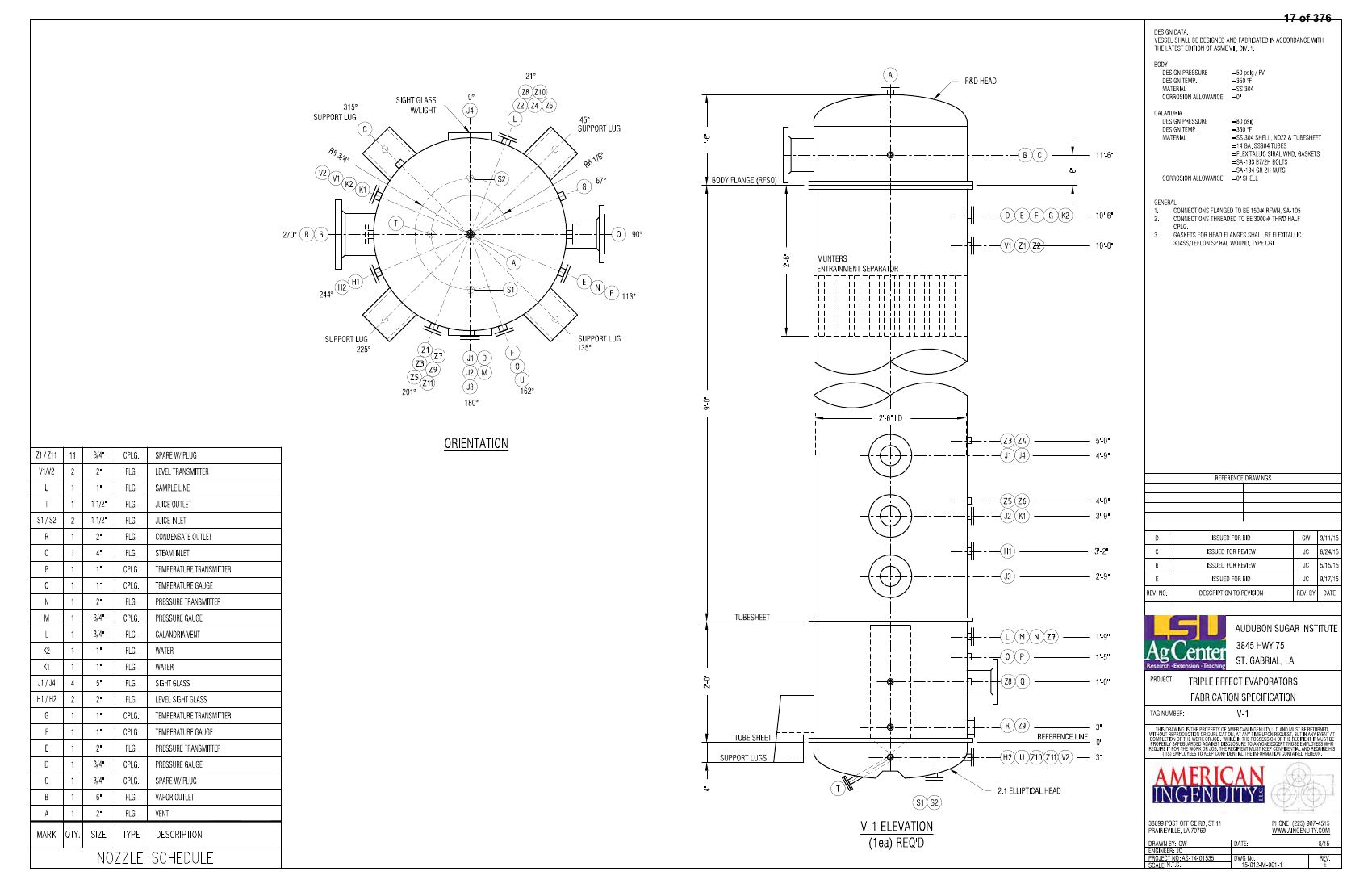
LSU AgCenter, Louisiana, United States
Source: The source is the Louisiana State University Agricultural Center, Office of Facilities Planning (for the Audubon Sugar Institute pilot plant); the documents were prepared by American Ingenuity LLC for the Pilot Plant Evaporators Renovation: new Roberts type triple effect evaporators (Project No. AS-14-01535, Fabrication Specification M-001 Rev F), 2015.
What made it hard: It is one scanned 376-page file. The vessel drawings use outlined text that only reads as a picture, the data sheet check boxes are graphics, and the drawings and data sheets disagree on flanges, supports, nozzles and test pressure.
Result: The run got 33 of 35 checks right and found 15 of 16 key contradictions, and 26 of the 31 contradictions it flagged held up. It took 22.4 minutes.
One find beyond the key: The sight glass and level glass connections are called studding flanges and studding outlets on the data sheets, flanged nozzles on the drawings and weld pads on DD8 and the sight glass sheets, which changes the price of 12 five-inch openings.
University of Arizona, United States
Source: The source is the Arizona Board of Regents on behalf of the University of Arizona (Procurement and Contracting Services), RFP L192302 High Pressure Air Receivers for the University's hypersonic wind tunnel facility, with Addendum 1, 2022.
What made it hard: It is only 35 pages. The vendor chooses how many vessels to build, two rough sketches are the only drawings, and the pricing form gives a different volume and design temperature from the specification.
Result: The run got 25 of 25 checks right and found 5 of 5 key contradictions, and 8 of the 14 contradictions it flagged held up. It took 11.9 minutes.
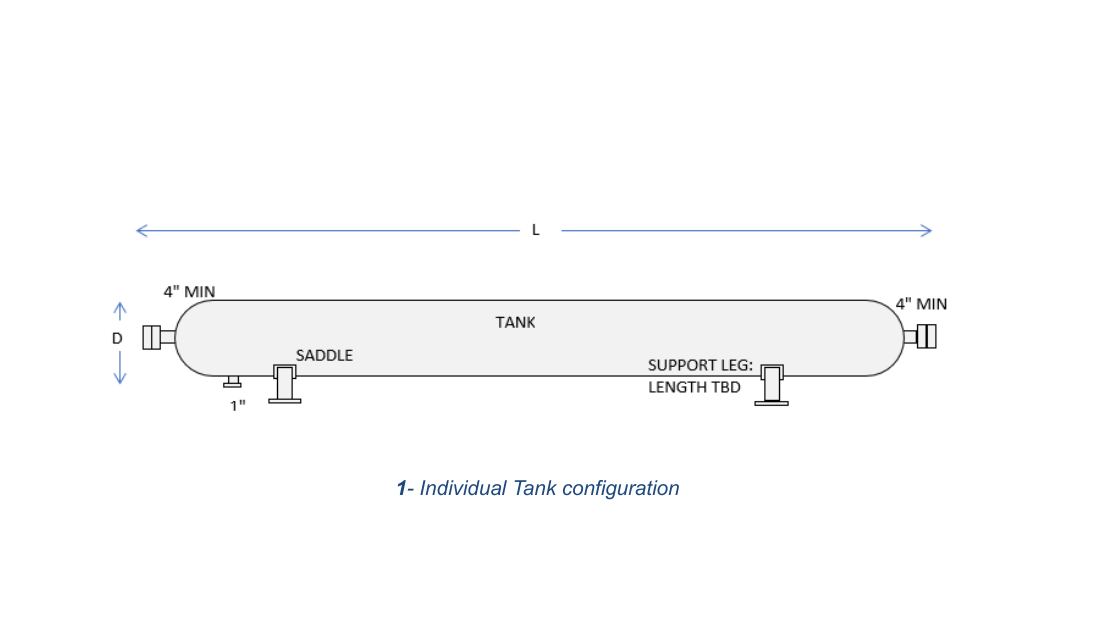
One find beyond the key: The drawing says the main nozzle can be as small as 4 inches, but even twelve 4-inch nozzles fall short of the 160 square inch rule in the text, so that minimum is never acceptable.
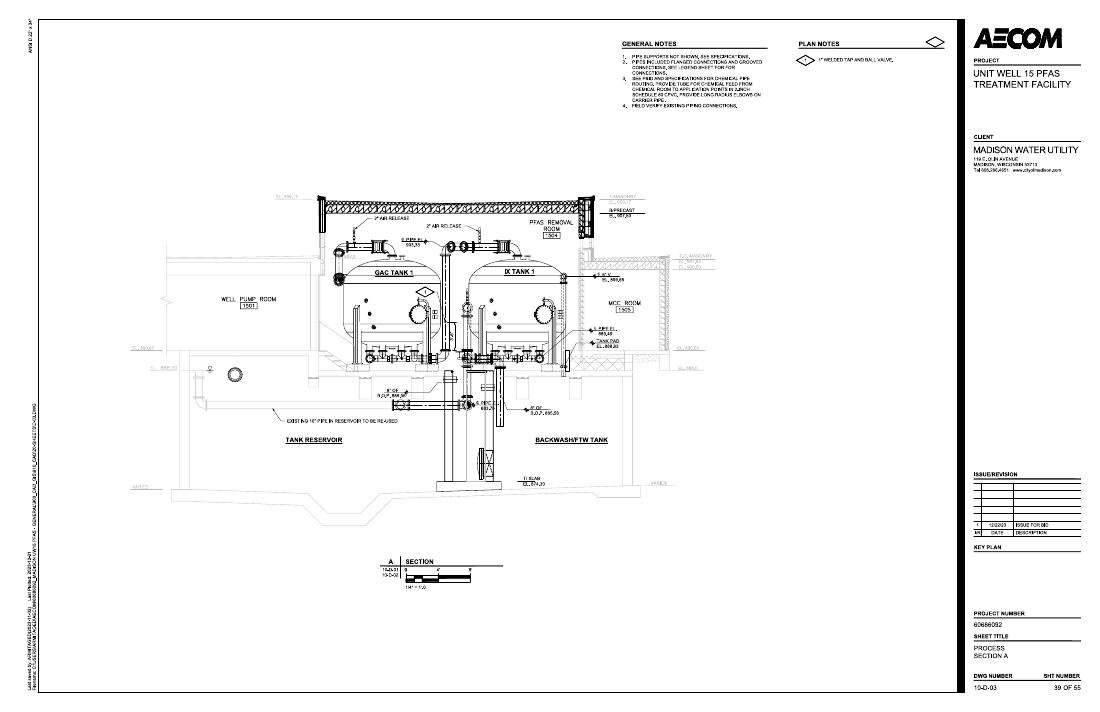
Madison, Wisconsin, United States
Source: The source is the City of Madison, Wisconsin, Madison Water Utility (engineer: AECOM), Unit Well 15 PFAS Treatment Facility, Contract No. 9342 (Project No. 14092): four GAC / ion exchange pressure vessels inside a general construction contract, 2024.
What made it hard: Addendum 4 reissued the vessel section with tracked changes, and the text inside the PDF holds both the struck and the new words. No design pressure number appears anywhere, and the drawings have no text a computer can copy.
Result: The run got 32 of 32 checks right and found 9 of 9 key contradictions, and 13 of the 21 contradictions it flagged held up. It took 24.2 minutes.
One find beyond the key: The spec asks for combination air/vacuum release valves, but the drawings show plain automatic air release valves, which matters because no vacuum rating is given for the vessels.
Fermilab, Illinois, United States
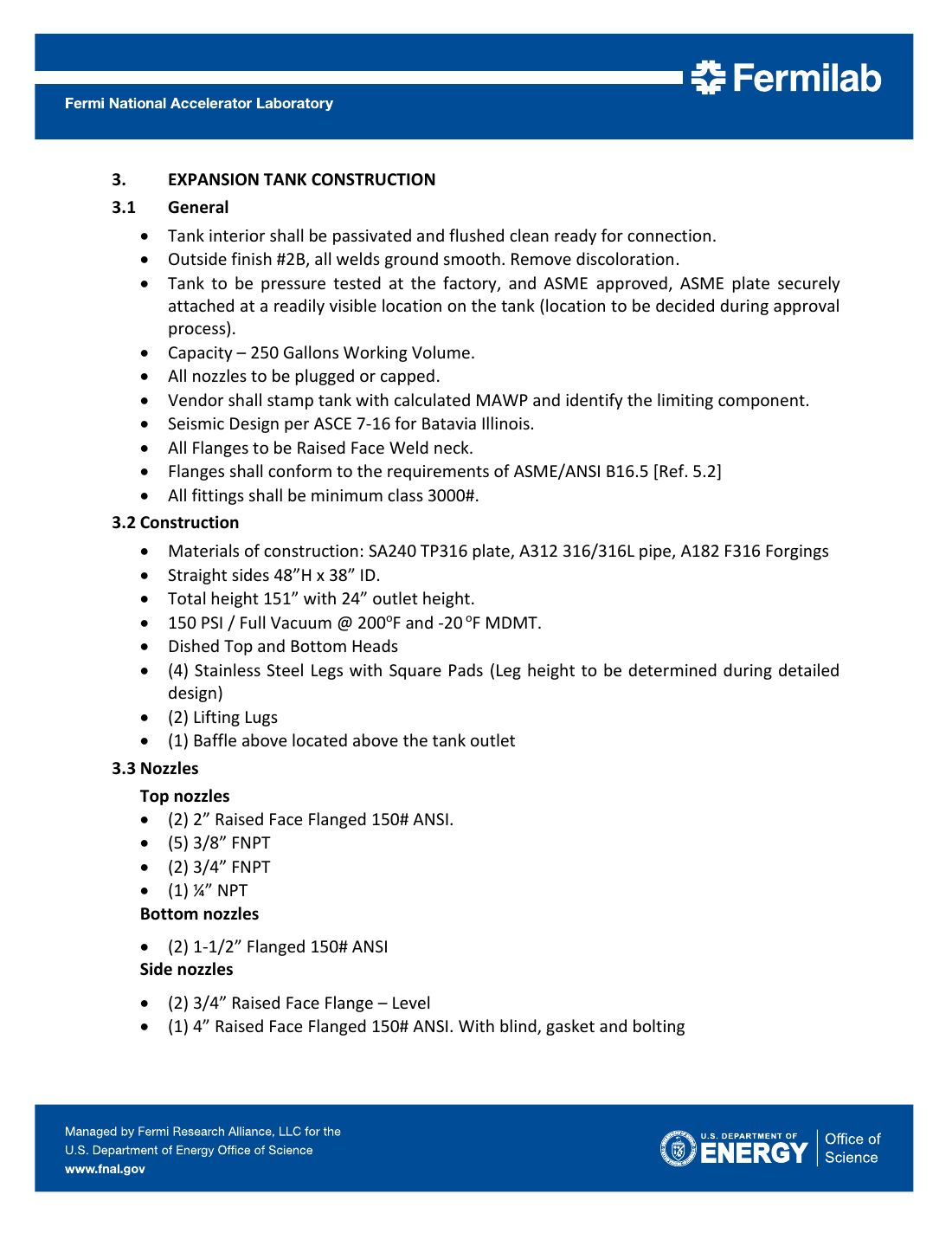
Source: The source is Fermi Forward Discovery Group, LLC (FFDG), operator of Fermi National Accelerator Laboratory (Fermilab), Batavia, Illinois, for the PIP-II F37 Building LCW expansion tank and shell-and-tube heat exchanger (RFP 371305 per the package label; the number is not printed in any of the five files), 2025.
What made it hard: It has two short specifications with no drawings and no quantity, and they were issued as early-release copies. The tank gives two design temperatures, and the exchanger specification has a gasket clause written for a different kind of exchanger.
Result: The run got 30 of 30 checks right and found 6 of 6 key contradictions, and 9 of the 20 contradictions it flagged held up. It took 11.7 minutes.
One find beyond the key: The tank's full-vacuum rating appears only in Section 3.2 and is missing from the Section 2.3 design table, and vacuum design is a real thickness and stiffening cost on a thin stainless tank.
Olivehurst, California, United States
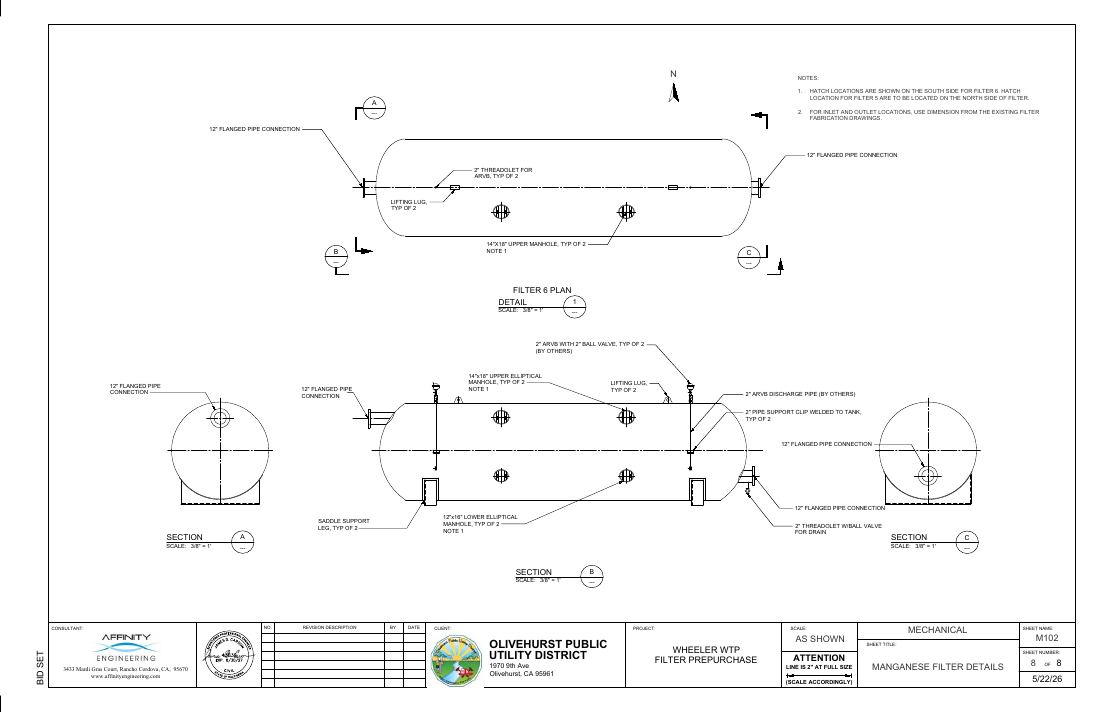
Source: The source is the Olivehurst Public Utility District (California), Wheeler WTP Capacity Increase, Filter Prepurchase, Project No. 2026-003 (horizontal manganese pressure filters), 2026.
What made it hard: The vessel section is not in the bid book at all. It arrived in Addendum 1 and was reissued three times, each time with struck text that still reads as live text, and the contract, the general requirements and the drawings disagree on quantity, delivery date and damages.
Result: The run got 32 of 32 checks right and found 18 of 18 key contradictions, and 18 of the 25 contradictions it flagged held up. It took 15.2 minutes.
One find beyond the key: The Summary of Work and the O&M section name the Plumas Lake WTP and a Plumas Lake project, while everything else in the package says the Wheeler WTP, so the delivery point and site visits need confirming.
Federal Bureau of Prisons, Terre Haute, Indiana, United States
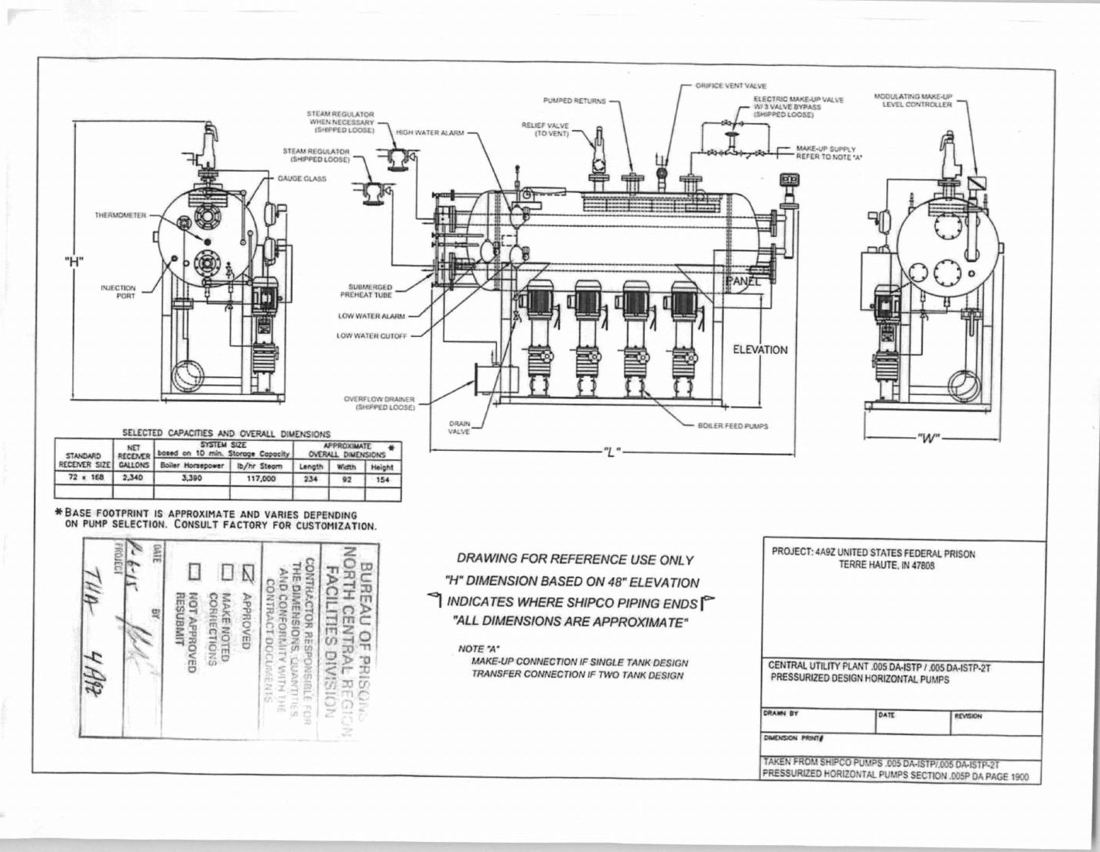
Source: The source is the U.S. Department of Justice, Federal Bureau of Prisons (Field Acquisition Office, Grand Prairie TX) for FCC Terre Haute, Indiana, Replace DA Surge Tanks, FCC Terre Haute central utility plant, solicitation IFBP04181500005, project 4A9Z, 2015.
What made it hard: The scope of work and both drawings are scans with no text, the drawings are vendor catalog sheets marked approximate, and the package never states a code, a design pressure or a material grade for the vessels.
Result: The run got 25 of 25 checks right and found 3 of 3 key contradictions, and 8 of the 17 contradictions it flagged held up. It took 19.5 minutes.
One find beyond the key: The SOW requires the surge tank to be able to bypass the deaerator and feed the boilers directly, but neither reference drawing shows any bypass connection, so that scope is undefined.
YPFB, Bolivia
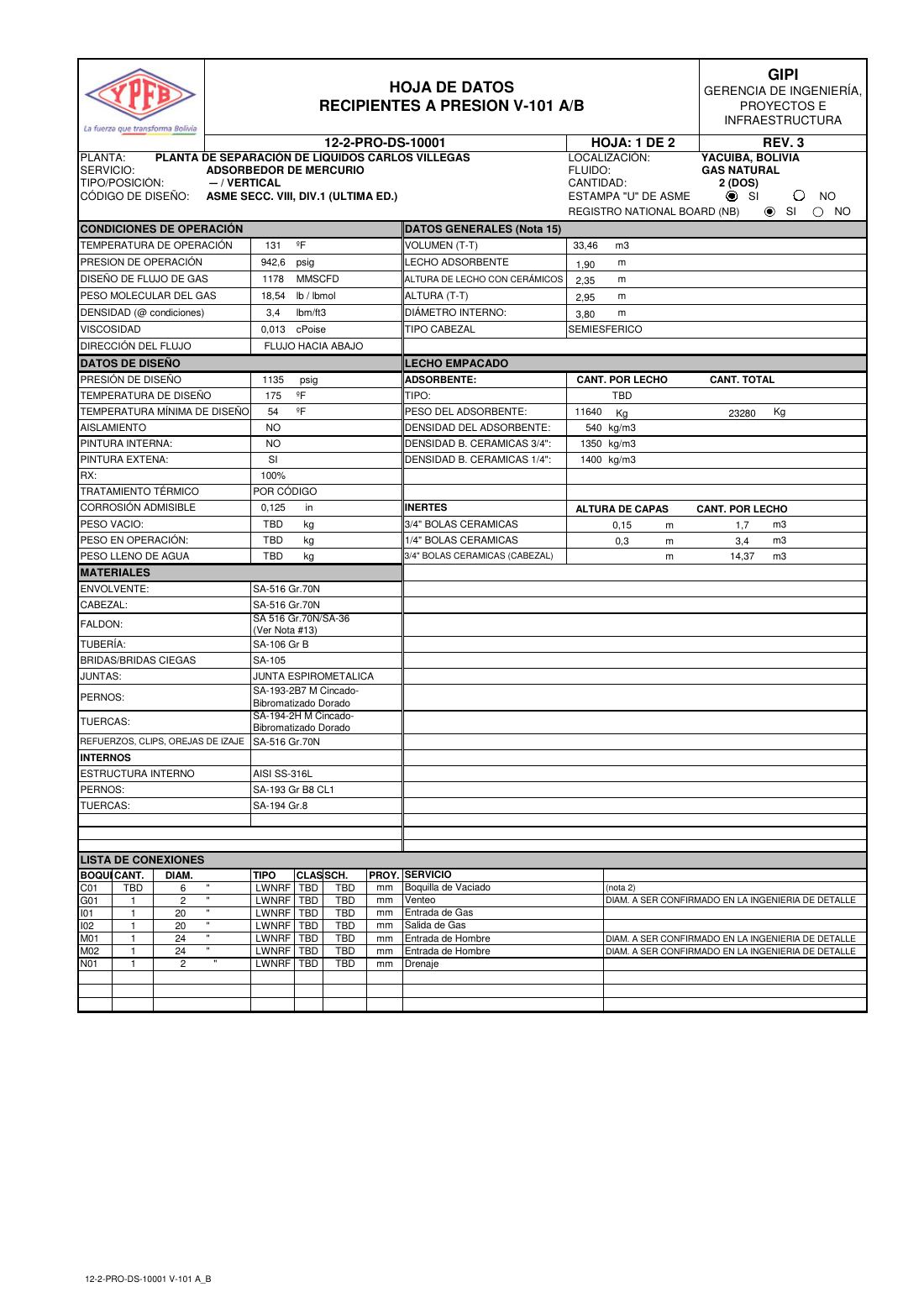
Source: The source is Yacimientos Petrolíferos Fiscales Bolivianos (YPFB), for the detail engineering, procurement, construction, commissioning and start-up (turnkey EPC) of mercury removal units at the Rio Grande and Carlos Villegas liquids separation plants, tender DCO-CDL-GIPI-56-19, 2019.
What made it hard: It is a 539-page turnkey tender in Spanish. The vessel data sheets are preliminary, the nozzle classes are left as TBD, the stamp and registration ticks are graphics, and one vessel's design temperature on the P&ID differs from its data sheet by almost 400 degrees.
Result: The run got 38 of 38 checks right and found 9 of 9 key contradictions, and 14 of the 24 contradictions it flagged held up. It took 29.8 minutes.
One find beyond the key: Both strainer data sheets say the fines are 0.1% of the adsorbent charge, which they state as about 7 kg, but 0.1% of the stated charges is about 23 kg at Carlos Villegas and 3.4 kg at Rio Grande.
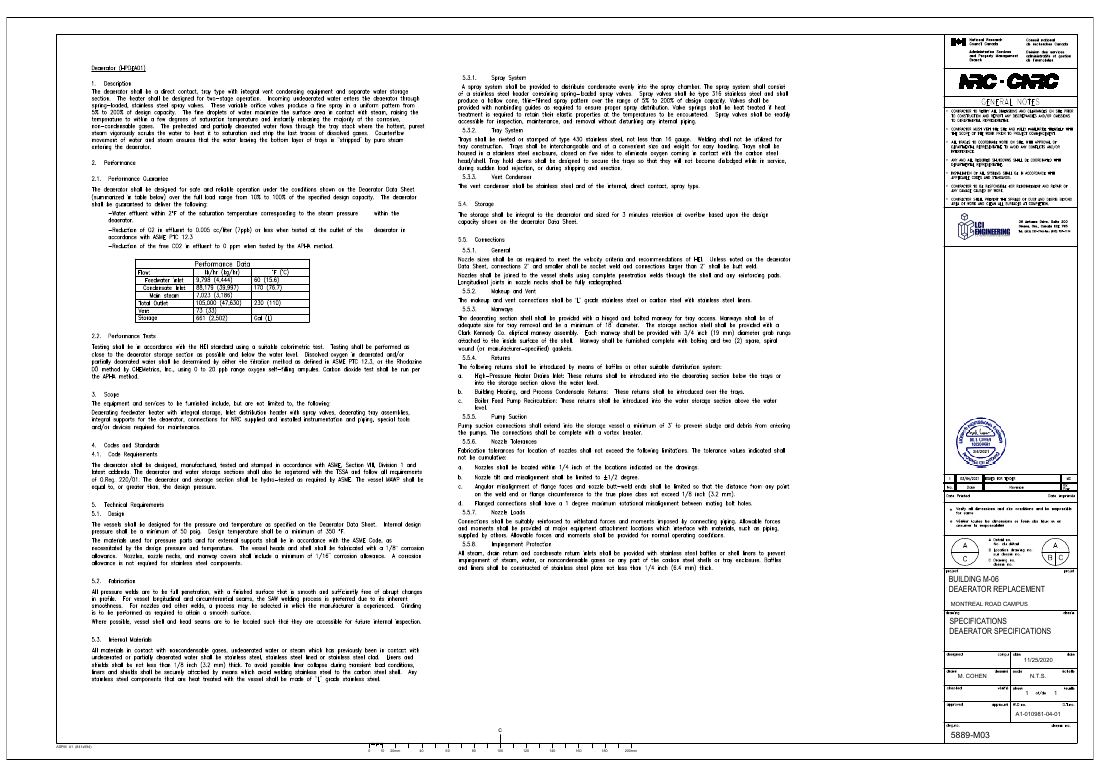
National Research Council, Ottawa, Canada
Source: The source is the National Research Council Canada (NRC), Real Property Planning and Management, Building M-06 Deaerator Replacement, Montreal Road campus, Ottawa, solicitation 20-58139, NRC project 5889, 2021.
What made it hard: The whole vessel specification sits on drawing sheets with no text layer. The data sheet it refers to is missing from the package, and two addenda reissue sheets and change the schedule.
Result: The run got 31 of 32 checks right and found 9 of 9 key contradictions, and 16 of the 23 contradictions it flagged held up. It took 20.7 minutes.
One find beyond the key: The support clause on M04 says the new legs match the existing plates and bolt pattern, but the structural sheets S02/S03 show four new base plates with the supplier's frame welded to new top plates.
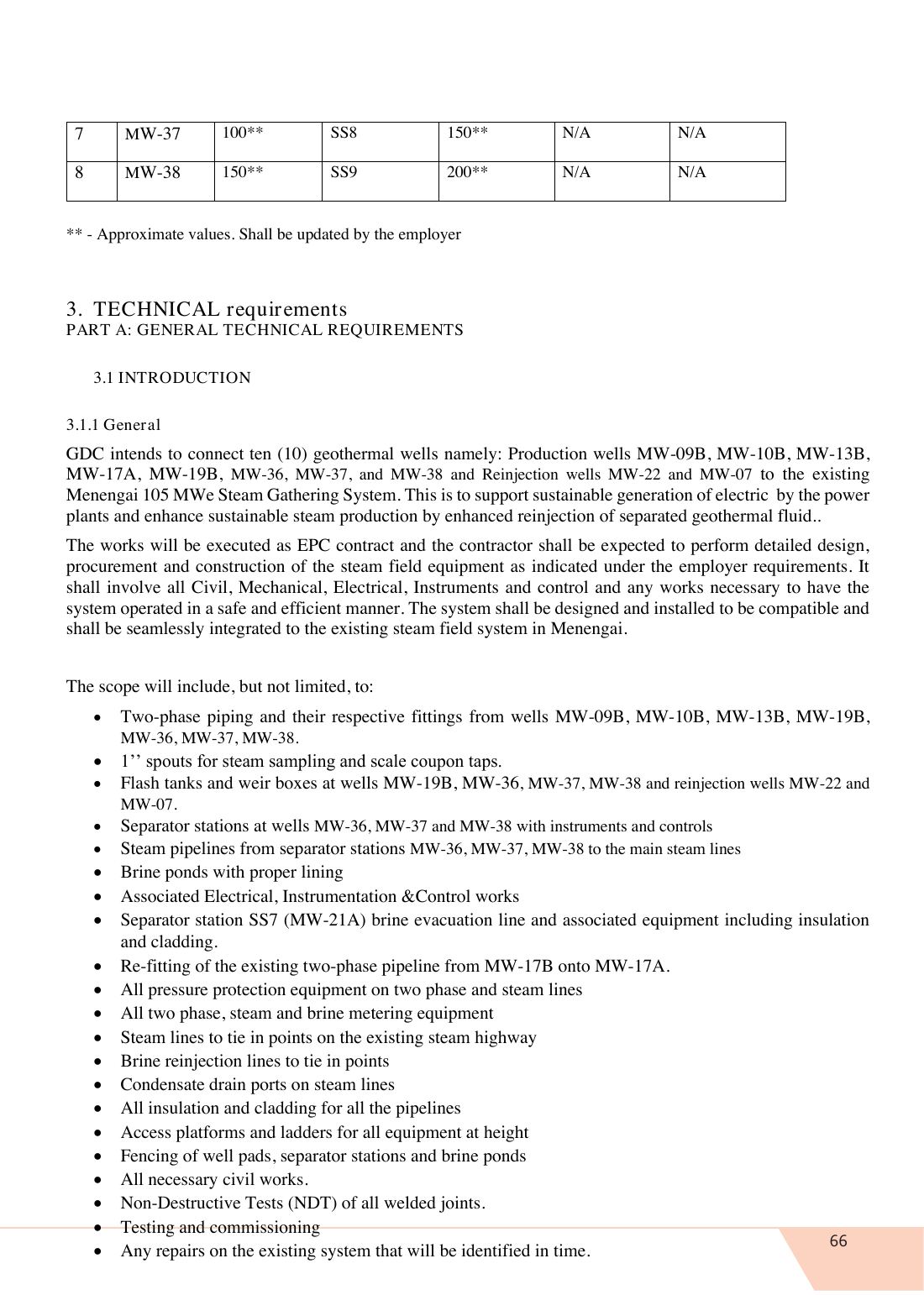
Geothermal Development Company, Kenya
Source: The source is the Geothermal Development Company Ltd (GDC), Connection of Additional Wells to the Menengai 105 MWe Steam Gathering System (EPC), tender GDC/GRM/OT/005/2024:2025, 2024.
What made it hard: It is a 302-page tender for a whole steam field, with no vessel data sheet at all. The vessel requirements are spread across the specification, and several clauses look copied from other projects.
Result: The run got 21 of 21 checks right and found 10 of 11 key contradictions, and 17 of the 22 contradictions it flagged held up. It took 21.3 minutes.
One find beyond the key: The manufacturer authorization form asks the vessel maker to warrant design, installation and commissioning of power plant equipment 'at Paka', a different project, while the defects period is left blank.
Downloads
The scores and all ten answer keys are free to download. Each key lists every check with the quote and page it came from, and the contradictions we confirmed before the runs.
To cite this page:
Changelog
Version 1.0, 18 November 2026. All ten packages run once and scored: Thornton, LSU, Arizona, Madison, Fermilab, Olivehurst, Terre Haute, YPFB Bolivia, NRC Ottawa and GDC Kenya.
Reading the package is only the first step of a quote. The AI Quoting Engine then prices every line from your own rates, carries both readings where the documents disagree, and writes the questions for your customer, so your estimator checks a draft instead of starting from a blank sheet.
See how it works for pressure vessel shops
Book a demo